
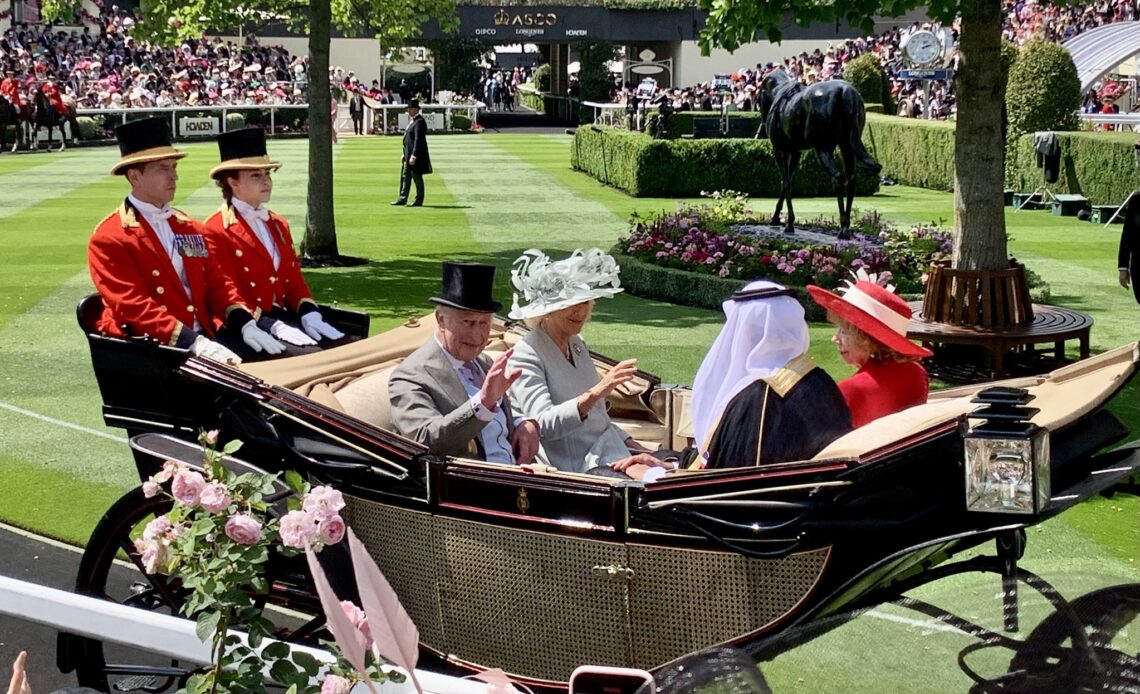
The famous horse drawn procession at Royal Ascot could face disruption following a major outbreak of equine influenza described as the worst seen “in recent history”.
The British Horseracing Authority has announced emergency biosecurity measures after a sharp rise in equine flu cases outside the thoroughbred racing population.
From Wednesday, only horses from licensed training yards will be permitted to enter British racecourses on racedays as officials attempt to prevent further spread of the highly contagious disease.
The restrictions have already forced the cancellation of all hunter chases, including the full card scheduled at Stratford Racecourse on May 29.
Additional racecourse attractions involving horses from unlicensed premises – including pony rides, petting farms and Retraining of Racehorses parades – have also been suspended indefinitely.
Attention has now turned to Royal Ascot next month, where the daily royal procession featuring King Charles and Queen Camilla arriving by carriage remains one of the centrepieces of the event.
Because carriage horses involved in the procession may not come from licensed thoroughbred yards, concerns have emerged over whether the spectacle could be affected by the new restrictions.
However, the BHA confirmed it is working closely with Ascot officials to ensure the procession can still go ahead safely.
In a statement, the governing body said: “The BHA is also working with Ascot Racecourse to replicate the biosecurity measures of a licensed premises to enable the Royal procession to go ahead without any increased risk.”
BHA Director of Equine Regulation, Safety and Welfare James Given said the measures were necessary due to the severity of the outbreak.
“Levels of equine flu are higher than at any time in recent history and it’s essential that we take all necessary steps to protect the thoroughbred herd,” he said.
“These measures follow extensive engagement with independent infectious disease experts about how we further reduce the risk of exposure and ensure the continuity of racing.”
Officials are particularly concerned about preventing interaction between racehorses and horses or ponies from unlicensed premises, where vaccination and health records may be less closely monitored.
Under current rules, all racehorses in Britain must receive regular vaccinations, including booster jabs at intervals of no more than six months.
The BHA has also introduced stricter spacing requirements between race meetings and outside equine events, increasing the mandatory gap from three days to six.
Royal Ascot remains scheduled to proceed next month, although racing authorities continue to monitor the outbreak closely as preparations intensify for one of the biggest weeks in the British sporting and social calendar.