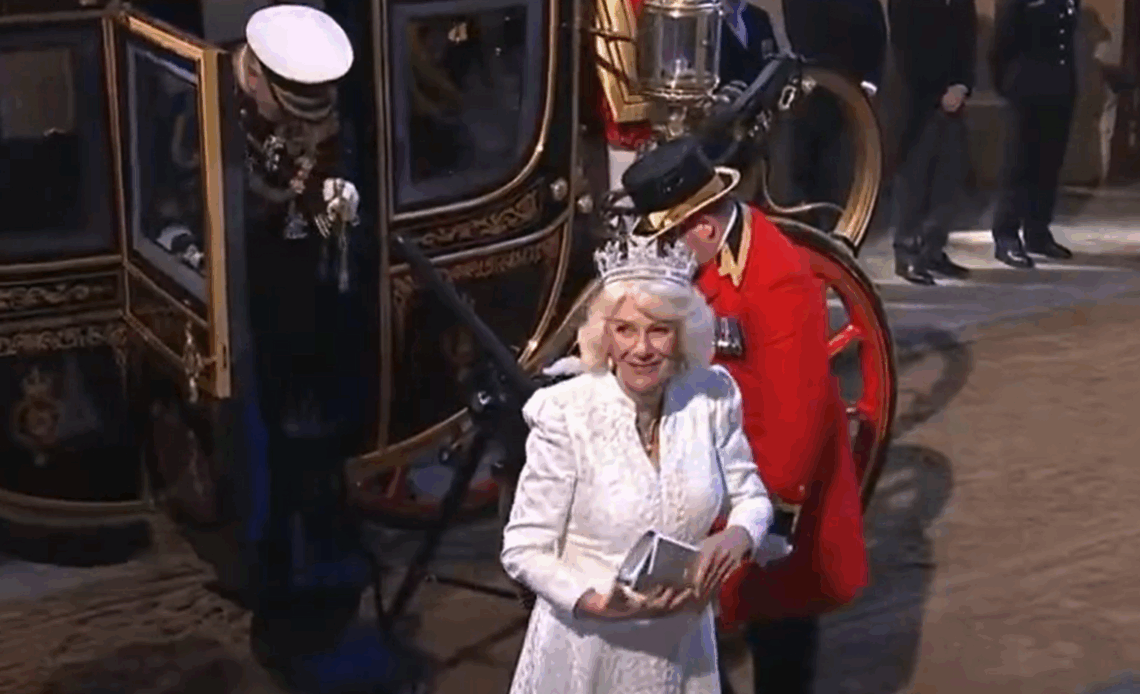
It is one of the most symbolic pieces of jewellery in the royal collection and it took centre stage as Queen Camilla arrived at the Houses of Parliament for the State Opening of Parliament. This was one of the most anticipated openings in recent years, coming at a time of political turmoil, but the febrile atmosphere at Westminster was put in the shade, briefly, by the dazzling diamond coronet chosen by The Queen.
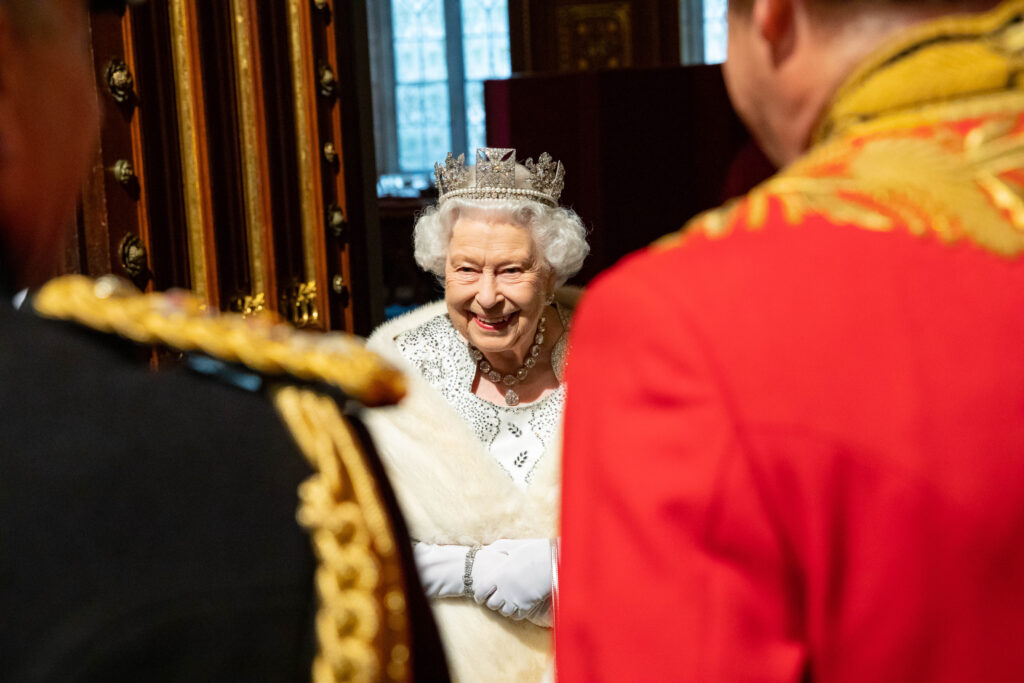
This sparkling gem has been a regular at the State Opening for decades now. Queen Elizabeth II usually wore the diadem for the procession to and from the Palace of Westminster. Towards the end of her reign, Her Late Majesty chose to wear this gem throughout the State Opening while the heavier Imperial State Crown was instead carried before her into the House of Lords on a red velvet cushion and placed by the throne as a symbol of royal power.
Since the accession of King Charles III, it’s been worn by Queen Camilla to the State Opening, the ceremony which marks the official beginning of the parliamentary session. However, this gem has a surprising history. For it was originally made for a king.
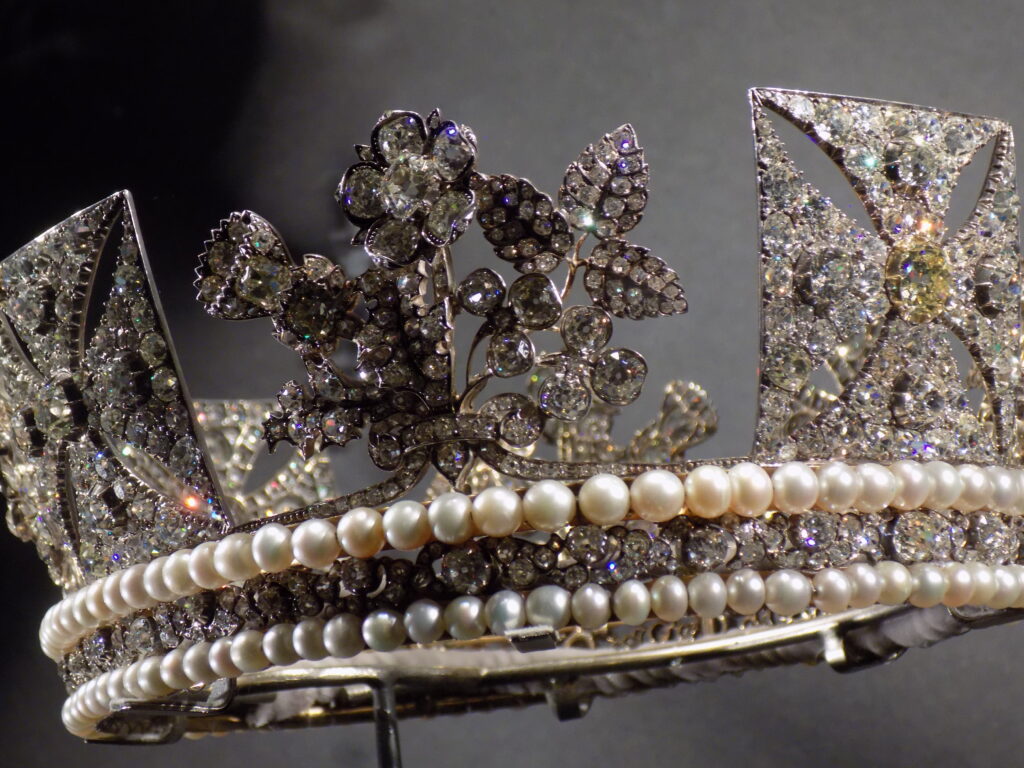
The clue is in its name. It is called the George IV State Diadem by some and it was made, originally, for the ultimate royal style icon. George IV commissioned this rather exquisite piece of jewellery for himself.
George IV had the diadem made in 1820 as he finally ascended the throne after over fifty years as heir to the throne and ten as regent. The gold and silver frame is decorated with over 1,300 diamonds and its design was rather modern at the time. Around the central cross, the new king had the gemstones worked into the four symbols for England, Ireland, Wales and Scotland rather than traditional heraldic symbols.
It could be seen as a canny move by George who was constantly criticised for his excessive spending. This diadem, which was worn by the king on the way to his coronation in 1821, helped to underline his position at the heart of his new realm. Whether it made much of an impact is debateable. George was never a popular king and his excessive spending did little to endear him to his people or his politicians. On his death, in 1830, the throne passed to his younger brother who became King William IV.
The new King William had no intention of following in his fashion obsessed brother’s footsteps and there was no question of him wearing the diadem to his coronation. In fact, William was so oppose to pomp and pageantry that he didn’t even want a coronation at all and had to be persuaded to take part in one. He chose such a pared down affair that it became known as the Half Crown-ation and the Penny Coronation as it was so low key in comparison to that of George IV. William even wore his naval uniform to the event, hardly a match for an all diamond coronet.
However, William’s wife became rather fond of the diadem and began to wear it during her husband’s brief reign. And Queen Adelaide ensured that this sparkling gem passed into the jewellery collection marked ”queens only’. Every consort since has worn it as have the two queens regnant, Victoria and Elizabeth II.
The diadem itself is much lighter than the State Crown but is still a highly symbolic piece of jewellery. It was also among the most familiar signs of Elizabeth II’s reign as she was shown wearing it on the portraits used on stamps and coins in Britain and the Commonwealth.
Queen Elizabeth II wore the George IV State Diadem to her first State Opening of Parliament in 1952. Then, the Imperial State Crown wasn’t an option as her own coronation hadn’t taken place. Queen Camilla has worn it for every State Opening of her husband’s reign.
And amidst the ever changing political landscape of Westminster, it is a constant. And a rather sparkly distraction.