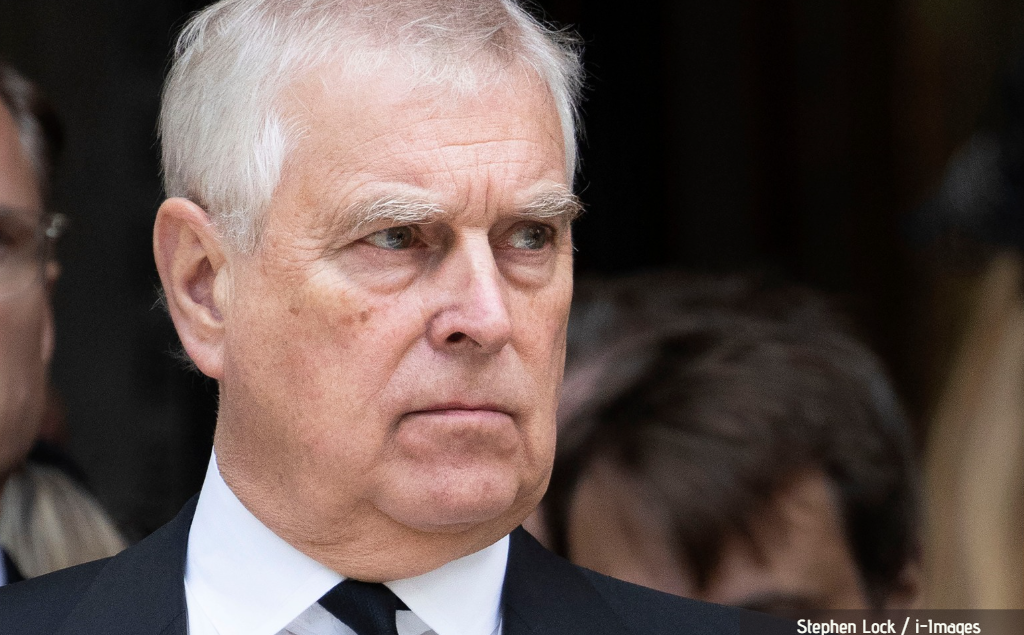
In recent months, there has been significant public and political pressure for Andrew Mountbatten‑Windsor to be removed from the line of succession.
That pressure stems from renewed scrutiny over his past associations with the convicted sex offender Jeffrey Epstein and allegations linked to those relationships, which have prompted legal investigations and intense media attention.
A fall from royal grace
His older brother, King Charles III, stripped him of his royal titles and roles in 2025 — meaning he is no longer styled as Prince Andrew and now uses the surname Mountbatten‑Windsor. Critics argue that continuing to keep him in the succession is inappropriate given these controversies.
However, to formally remove him from the line of succession, a process would require agreement from all 15 Commonwealth realms where the monarch is head of state.
From second to eighth
At birth, Andrew Mountbatten-Windsor was second in line to the British throne, just behind his older brother, Charles. In 1982, he moved to third on the birth of Prince William. The arrival of Prince Harry in 1984 relegated Andrew to fourth. He moved further down the line as William had his children – George in 2013, Charlotte in 2015 and Louis in 2018. The birth of Harry’s children – Archie in 2019 and Lili in 2021 – moved him further away from the throne.
Since the accession of Charles III, Andrew Mountbatten-Windsor is eighth in line to the throne.
A timeline of Andrew’s move down the line of succession
1960 – 1982 Andrew Mountbatten-Windsor is second in line to the throne
June 21 1982 The birth of Prince William moves Andrew to third
September 15 1984 The birth of Prince Harry moves Andrew to fourth in line
July 22 2013 Andrew moves to fifth in line to the throne on the birth of Prince George
May 2 2015 The birth of Princess Charlotte changes the line of succession and Andrew is now sixth
April 23 2018 A third child for William and Kate, Prince Louis, means Andrew moves to seventh
May 6 2019The birth of Prince Archie moves Andrew Mountbatten-Windsor to eighth
June 4 2021 A second child for Harry and Meghan, Princess Lilibet, means Andrew is now ninth in line to the throne
September 8 2022 The death of Queen Elizabeth II and the accession of King Charles III alters the succession again with Andrew rising to eighth
Louder calls for removal from the succession
In the midst of the debate about whether he should retain his right to inherit the throne, several leaders from Commonwealth realms have publicly supported the idea of removing Andrew from the succession:
- Canada: Prime Minister Mark Carney has called for Andrew’s removal from the line of succession, describing his conduct as “deplorable” and advocating that he be excluded from the list of potential monarchs.
- Australia: Prime Minister Anthony Albanese confirmed that his government would back any proposal to remove Andrew — and even wrote to UK Prime Minister Keir Starmer to express Australia’s support.
- New Zealand: The New Zealand government has also shown support for exploring a removal, aligning with other Commonwealth realms concerned about the integrity of the succession.
How Andrew Mountbatten-Windsor could be removed from the succession
Pulling someone out of the line of succession is no small matter. It isn’t just a unilateral decision by the UK: because the same monarch serves as head of state in other realms, all of those nations must consent to any change in succession law. That means reaching a consensus among parliaments — from the UK to Canada, Australia, New Zealand, and beyond — before a statute could formally take Andrew out of the line.
Why it is being discussed
Succession isn’t just a list of names — it represents
centuries-old constitutional traditions, shared identities across
multiple nations, and legal frameworks that bind realms together.
That’s why discussions about Andrew Mountbatten‑Windsor’s place in
that list have resonated far beyond his personal circumstances:
they touch on modern expectations for accountability, the symbolic
role of monarchy, and how shared institutions evolve in changing
times.