
The King has acknowledged the suffering endured by people in the Caribbean during the region’s history of slavery, as he began a nine-day royal tour amid renewed calls for Britain to address its colonial past.
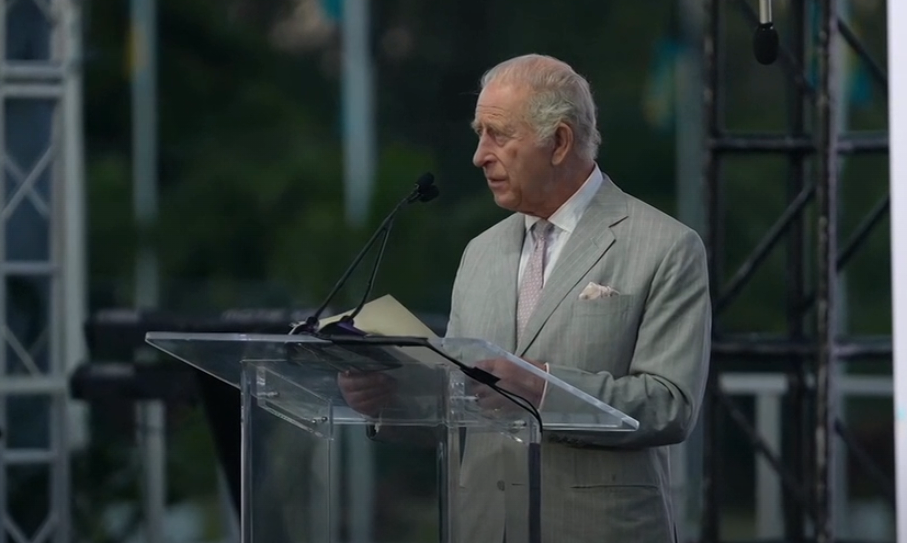
Speaking at a youth event in Nassau, The King reflected on the historic injustices that shaped the Bahamas, recognising the importance of confronting difficult chapters of history while looking towards the future.
His remarks came as he began his first visit to the Caribbean as monarch, with the programme taking in the Bahamas, Guyana and Antigua and Barbuda.
The tour will conclude with the Commonwealth Heads of Government Meeting (CHOGM), where the legacy of slavery is expected to feature in discussions between leaders.
The visit comes amid renewed pressure from Caribbean nations for Britain to acknowledge its historic role in the transatlantic slave trade, with campaigners continuing to call for an apology and reparations.
Buckingham Palace has indicated that The King will engage with the region’s colonial history during the visit. However, the UK Government has maintained its position against offering an apology or reparations for Britain’s role in the slave trade.
The King meets young people in Nassau
The King arrived in the Bahamas on Tuesday, where he was welcomed by Governor General Dame Cynthia A. Pratt and Prime Minister Philip Davis.
He also inspected a guard of honour provided by members of the Royal Bahamas Defence Force before travelling to Clifford Park for a youth rally.
The venue held particular significance for The King, who attended celebrations marking the Bahamas’ independence as Prince of Wales in 1973.
At the rally, he met young people and performers, with the event celebrating the country’s culture and the ambitions of its next generation.
His speech also addressed environmental concerns, drawing attention to the challenges facing low-lying Caribbean islands as they confront the effects of climate change.
The King reflected on the responsibility of younger generations to protect the natural world, emphasising the importance of safeguarding the environment for future prosperity and security.
Calls for reparations greet the royal visit
The King’s arrival was accompanied by demonstrations from campaigners seeking greater recognition of the consequences of slavery and colonialism.
A small group gathered outside the youth rally, calling for reparations and the return of cultural artefacts they believe were taken from the region.
The protest highlighted the continuing debate over Britain’s historical relationship with the Caribbean, with some campaigners arguing that the monarchy should use its influence to encourage a change in the UK Government’s position.
The question of reparations has become an increasingly prominent issue for several Caribbean nations, which have called for discussions about the long-term consequences of slavery and the measures needed to address them.
The King’s visit provides an opportunity for engagement with these issues, although decisions on the UK Government’s policy remain a matter for ministers.
A nine-day Caribbean tour
The Bahamas is the first stop on The King’s nine-day tour, which will continue in Guyana before concluding in Antigua and Barbuda.
In the Bahamas, further engagements will focus on the vulnerability of Caribbean islands to climate change and the country’s distinctive cultural traditions, including Junkanoo, the colourful street parade and festival.
The programme has also been designed to include opportunities to reflect on the legacy of the slave trade, including visits to memorials and places of remembrance.
Buckingham Palace has emphasised that the tour will also celebrate contemporary partnerships and opportunities across the region, with a particular focus on initiatives supporting future generations.
The King will travel to Guyana later in the week, where the programme will highlight environmental protection and biodiversity.
He will then visit Antigua and Barbuda, where Queen Camilla will join him for the Commonwealth Heads of Government Meeting.
The summit will bring together leaders from across the 56-member Commonwealth to discuss shared challenges and opportunities for cooperation.
The King is expected to deliver a keynote address as Head of the Commonwealth, with the gathering providing a further opportunity for discussions about the organisation’s shared history and future direction.