
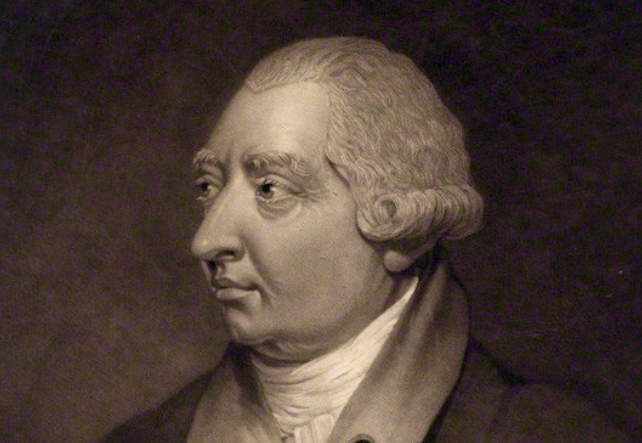
The discovery of Uranus in 1781 transformed our understanding of the Solar System, but the planet could have carried a very different name – one honouring a British king.
When astronomer William Herschel identified the previously unknown planet, he proposed calling it Georgium Sidus, meaning “George’s Star”, in tribute to King George III.
The suggestion reflected the close relationship between scientific discovery and royal patronage in 18th-century Britain, when the support of the Crown could play an important role in advancing scientific research.
Herschel’s discovery was a landmark moment in astronomy. Until then, Saturn had been regarded as the outermost known planet in the Solar System. The identification of another planet demonstrated that the boundaries of the known planetary system extended further than astronomers had previously understood.
However, the name proposed by Herschel would not ultimately survive.
A planet named for a king
Herschel initially wanted to name his discovery after George III, who reigned from 1760 to 1820. The king was a patron of scientific endeavour, and the proposed name would have provided a lasting tribute to the monarch.
The idea was encouraged by Nevil Maskelyne, the Astronomer Royal, who suggested that naming the planet in the King’s honour would be an appropriate way to recognise the royal support behind scientific progress.
Herschel adopted the suggestion, and Georgium Sidus appeared in astronomical publications in Britain.
The name was not universally welcomed, however. Astronomers elsewhere in Europe questioned whether a newly discovered planet should be named after a contemporary monarch rather than following the mythological tradition associated with the other known planets.
There was also a linguistic objection: sidus means “star” or “heavenly body”, rather than specifically identifying the object as a planet.
Why Uranus won
The German astronomer Johann Elert Bode proposed an alternative in 1782: Uranus, after the ancient Greek god of the sky.
The suggestion fitted more comfortably with the mythological associations of the other planets. Jupiter and Saturn took their names from Roman gods, while Uranus connected the new discovery to the wider family of deities associated with the heavens.
In Greek mythology, Uranus was the father of Cronus, the Greek counterpart of Saturn. Saturn, in turn, was associated with Jupiter through the Roman mythological tradition.
The proposed name therefore offered a connection to the established planetary naming conventions, rather than tying the discovery to a particular monarch or historical period.
Bode’s suggestion gradually gained acceptance among astronomers beyond Britain. However, the transition was not immediate, and Georgium Sidus continued to appear in British astronomical usage for decades.
It was not until the 19th century that Uranus became firmly established as the planet’s internationally accepted name.
King George III’s unexpected place in astronomy
Although the King’s name did not endure, the episode offers a glimpse into the relationship between monarchy and scientific discovery during George III’s reign.
Royal patronage helped support scientific institutions, researchers and the wider pursuit of knowledge. Herschel himself went on to enjoy royal recognition following his discovery, receiving a pension that allowed him to devote more time to astronomy.
The naming controversy also illustrates how scientific traditions develop. Even a discovery as significant as the identification of a new planet did not immediately produce agreement over what it should be called.
Had Herschel’s original proposal prevailed, schoolchildren today might learn about Georgium Sidus alongside Jupiter, Saturn and Neptune.
Instead, the name Uranus prevailed, securing the planet’s place in the Solar System under the title that astronomers recognise today.