
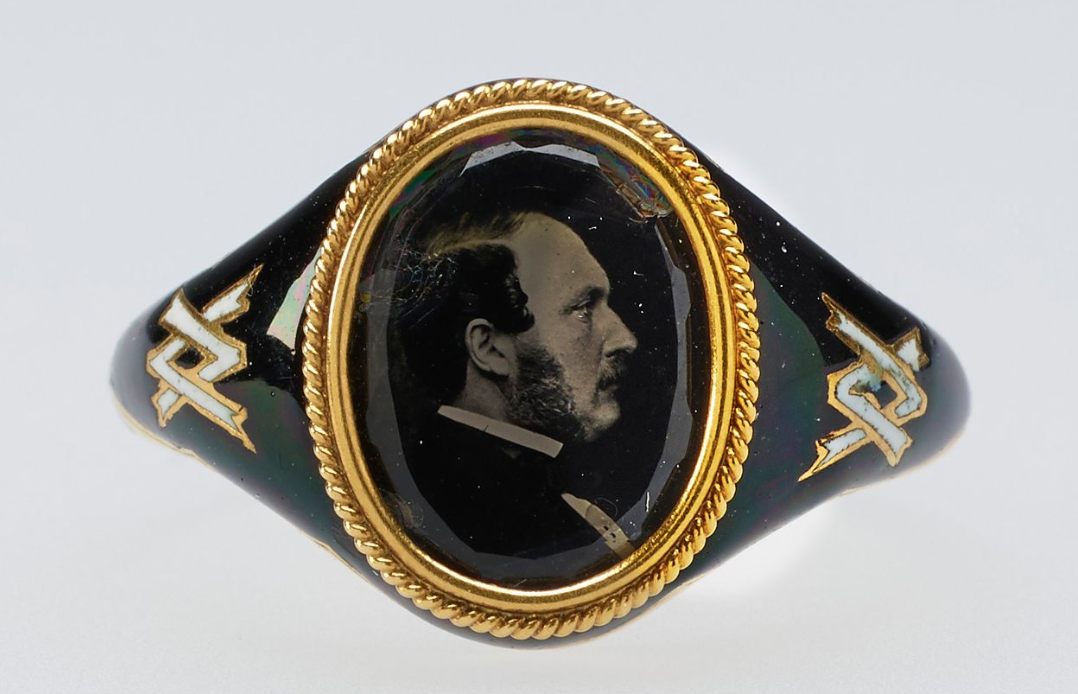
A deeply personal mourning ring commissioned by Queen Victoria following the death of her beloved husband, Prince Albert, will be among the remarkable royal treasures displayed in a landmark exhibition at Buckingham Palace next year.
The ring, which contains a tiny photograph of Albert beneath glass, is one of more than 300 pieces of jewellery spanning five centuries of royal history that will feature in Royal Jewellery: From Coronations to Keepsakes.
Opening at The King’s Gallery in June 2027, the exhibition will explore the stories behind the jewellery worn and treasured by generations of the Royal Family, with around two thirds of the objects being displayed publicly for the first time.
Queen Victoria commissioned the mourning ring following Albert’s death in December 1861, aged just 42. The Prince Consort’s death plunged the Queen into profound grief, and she continued to mourn him for the remainder of her life.
The ring offers a particularly intimate reminder of their relationship, preserving Albert’s likeness in a piece of jewellery designed to keep his memory close.
Made from gold with black and white enamel, the ring features a microphotograph of Prince Albert from 1861 within its bezel. The photograph is attributed to English photographer John Jabez Edwin Mayall, who may also have created the ring itself.
On either side of the bezel, the initials ‘V’ and ‘A’ are intertwined in white enamel, representing Victoria and Albert. The combination of the miniature portrait and the couple’s cypher transforms the ring into a deeply personal memorial to their marriage.
Measuring approximately 1.5 by 2.2 by 2.3 centimetres, the piece is a remarkable example of how photography and traditional craftsmanship could be combined to create intimate keepsakes during the Victorian era.
The ring forms part of the Royal Collection, where it is catalogued as Mourning ring with a microphotograph of Prince Albert (1819–61). Its hallmarks date from between 1857 and 1862, placing its manufacture within the period surrounding Albert’s final years and death.
Following her husband’s death, Queen Victoria commissioned numerous photographs and decorative objects to commemorate him. These included mourning portraits, jewellery and other decorative pieces, as well as memorial sculptures and architectural projects.
Such objects reflected the Queen’s determination to preserve Albert’s memory, both privately and publicly. Her mourning became an enduring part of her identity, and the image of Victoria dressed in black remained closely associated with her throughout the rest of her reign.
The ring will feature in an exhibition that explores the many roles royal jewellery has played throughout history, from expressions of political power and dynastic ambition to deeply personal symbols of love, loss and remembrance.
Royal Jewellery: From Coronations to Keepsakes will bring together jewels associated with monarchs from Henry VIII to Queen Elizabeth II, alongside paintings, designs and documents from the Royal Collection and Royal Archives.
The Crown Jewels will not be included, as they will remain on display at the Tower of London.
The exhibition will run for nine months from June 2027 at The King’s Gallery, Buckingham Palace, offering visitors a rare opportunity to discover the stories behind some of the most significant jewels in British royal history.