
The arrival of the Bayeux Tapestry in England for the first time in almost 1000 years has put a different kind of royalty in the spotlight. This summer is about to get medieval as the Conqueror, his queen and the crown he won and made his own are all anyone wants to talk about, Chainmail is all the rage for clothing and interiors, there are online queues for tapestry tickets and no autumn party will be complete without mead. Come with us to find out where you can get your Conqueror fix – we’re starting with a castle that William I had built. Keep up, it’s one of many.
However, it has a very special place in the Norman story. For Winchester was chosen by William I for one of his first castles in England. In 1067, just months after he won perhaps the most famous battle of all (Hastings, in case you’re still wondering), the Conqueror was busy fortifying his new kingdom to make sure he held on to it. He settled on Winchester, in southern England, as an ideal spot. And the castle he built there became the seat of power for Norman kings for over a century.
By 1200, new centres of power were rising but Winchester remained vitally important. The throne now belonged to William’s great, great grandson, John, who would go down in history as one of the worst monarchs of all time. Even in the early 1200s, his reputation was suffering but he remained king and was in Winchester when one of the most important moments of his life and reign happened. It was here that his son and heir was born.
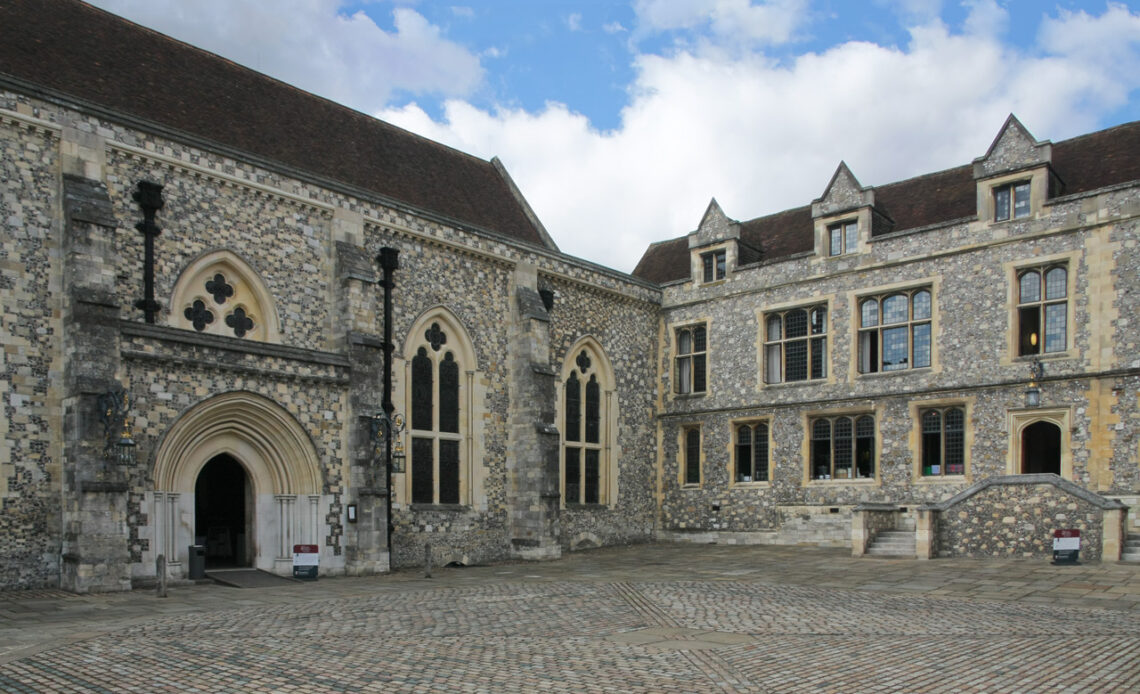
Just part of the castle where a monarch was born remains, testament to the devotion of that king to the place where his royal story began. But John’s decision to bring his court and his queen, Isabella, to Winchester around the time his heir was born ensured the castle became the site of the arrival of a king who steadied the English throne after one of its most turbulent times. The royal himself has a reputation for piety and primness but he put the Plantagenets back on course after a decade of drama fueled in some part by his parents. Winchester Castle, in Hampshire, has the distinction of being birthplace of King Henry III.
Visitors today can only see the Great Hall at Winchester which was built on Henry’s orders in the 1220s, the early part of his reign. His birth took place in stone walls long since lost.
Henry was born on October 1st 1207, the first child of King John and his wife, Isabella of Angouleme. Despite rumours swirling that the king and queen preferred to stay in bed til noon rather than get on with the job of ruling their realm, the couple had been married for seven years by the time they welcomed an heir. The baby boy was named Henry, after John’s father, Henry II, and was soon joined by a brother and three sisters.
The place of his birth had long links with his royal family. As well as its links to the very early years of the reign of baby Henry’s great, great, great grandfather, William the Conqueror, it had also been the place where Empress Matilda, the great grandmother of Henry III, had seen her own grab for the throne start to crumble when her troops came under siege at the castle during the Civil War in 1141.
The castle continued to hold royal affection for centuries after Henry’s death. His grandson, Edward II, had it extended during the early 14th century and in the late 15th century and it continued a a major royal residence with Mary I, first queen regnant of England, holding part of her wedding celebrations with Philip of Spain there. However, her half-sister, Elizabeth I, wasn’t nearly as fond of it and passed it over to the authorities of the city of Winchester. Oliver Cromwell had a large part of it torn to the ground and the plans of Charles II to restore it to its former glory were put aside by his brother and successor, James II.
Now, it remains a remnant of England’s earliest post Conquest royalty but the Hall built by the king who was born there on an October day over eight centuries ago continues to fascinate.
The Great Hall at Winchester Castle is open through the year and remains a striking example of medieval architecture. Visitors can walk in the footsteps of medieval monarchs and imagine the power battles that went on within its walls as the Norman dynasty established its hold ono England. There are also links to an even earlier royal story with the Great Hall’s Round Table and its associations with King Arthur. This version was made in the 13th century and later decorated in the reign of another king who left his mark on England, Henry VIII.
Winchester itself is packed with historic buildings including the cathedral, also begun in its present form in the reign of William the Conqueror. His son and successor, William II, was buried here after being killed in a hunting accident in the New Forest. The cathedral is also the resting place of Alfred the Great, King Canute and his wife, Emma, and King Egbert. They had been buried in the Old Minister and now rest at the cathedral.