
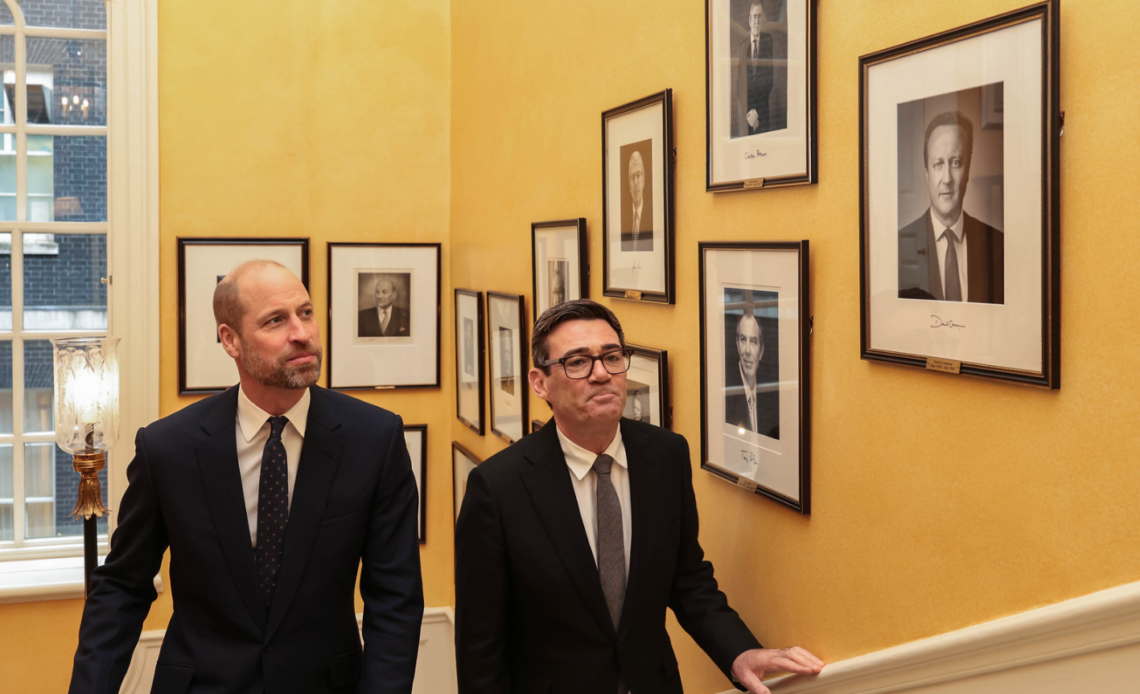
Prince William’s historic visit to 10 Downing Street has offered a fascinating glimpse of the role he will one day undertake as King, with one photograph capturing the future monarch surrounded by reminders of Britain’s political history.
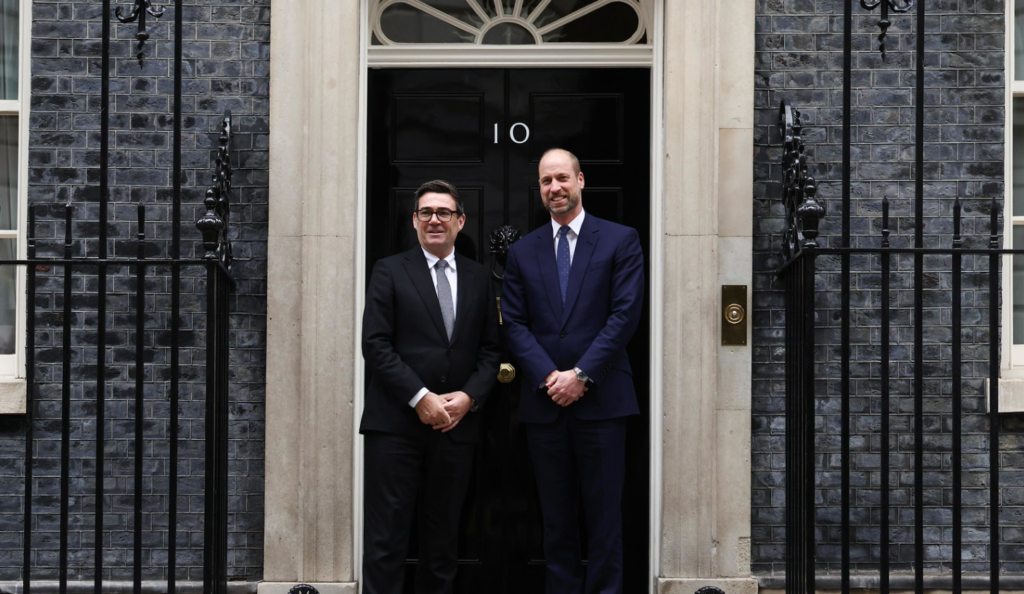
The Prince of Wales was pictured alongside Prime Minister Andy Burnham inside the famous Downing Street residence on Tuesday, November 24, during his first-ever visit to No 10.
Standing in a corridor lined with framed portraits of political figures, William was photographed alongside the man currently leading the country – a role that will one day be filled by a succession of prime ministers with whom the Prince will have a very different constitutional relationship.
When he eventually succeeds his father, William will become Britain’s head of state and will be expected to work with governments of different political persuasions, while remaining entirely impartial.
The monarch does not belong to any political party factions is expected to stand above the political divisions of the day, regardless of which party has won the latest general election.
It means William could one day find himself holding regular private conversations with prime ministers whose political beliefs and priorities are very different from one another.
Under the constitutional arrangements of the United Kingdom, the King currently holds a private weekly audience with the Prime Minister. These meetings allow the head of government to keep the sovereign informed about the business of the country.
Although the conversations are confidential, the monarch has the right to be consulted, to encourage and to warn their ministers.
The sovereign can offer advice and express concerns, but must ultimately respect the constitutional conventions that require the monarch to remain politically neutral.
William will inherit that responsibility when he becomes King.
The heir to the throne is already expected to meet the sitting Prime Minister at least once a year, although these meetings do not necessarily take place at Downing Street.
William met Sir Keir Starmer at Kensington Palace in January 2025, while Tuesday’s meeting with Mr Burnham marked his first official meeting with the Prime Minister at No 10.
The 56-minute conversation covered a number of shared priorities, including tackling homelessness, William’s Earthshot Prize and his Homewards initiative.
The Prince launched Homewards in 2023 with the ambition of demonstrating that homelessness can be made rare, brief and unrepeated. The programme is supporting projects in six locations across the UK.
Mr Burnham has also made tackling rough sleeping a priority, giving the two men common ground on an issue that has become an important part of William’s public work.
They also discussed the position of women in the military, while Mr Burnham congratulated William on his environmental work and the success of the Earthshot Prize, which held its sixth annual event in Mumbai last week.
The pair had previously met during the Omani state visit at Windsor Castle in October, but Tuesday’s encounter was their first official meeting.
William’s visit was particularly significant because it was the first time a senior member of the Royal Family had visited Downing Street since Queen Elizabeth II attended a Cabinet meeting in 2012, during her Diamond Jubilee year.
The late Queen was welcomed by then Prime Minister David Cameron, with the occasion marking a rare appearance by the sovereign at the centre of British government.
She had also visited Downing Street in 1985 to mark the 250th anniversary of the famous address.
The then Prince Charles and Princess Diana were guests of Margaret Thatcher at a dinner in November 1989, while Charles also visited Downing Street on several occasions during his time as Prince of Wales to learn more about the workings of government.
Queen Elizabeth II’s relationship with successive prime ministers became one of the defining features of her reign. She worked with 15 different holders of the office, from Winston Churchill to Liz Truss.
Her weekly audiences provided a private opportunity to hear directly from the person leading the Government, while allowing her to offer counsel accumulated over decades on the throne.
King Charles has continued the tradition since his accession.
William’s visit to Downing Street is therefore about more than a meeting with the current Prime Minister. It forms part of the gradual preparation for a constitutional role in which he will be required to maintain relationships with political leaders throughout his reign, without becoming involved in party politics.
The Prince is also expected to undertake further diplomatic visits on behalf of the Government next year, continuing to build his experience as a future head of state.
For now, the portraits lining the corridor at Downing Street provide a striking backdrop to a photograph of a man who remains heir to the throne.