
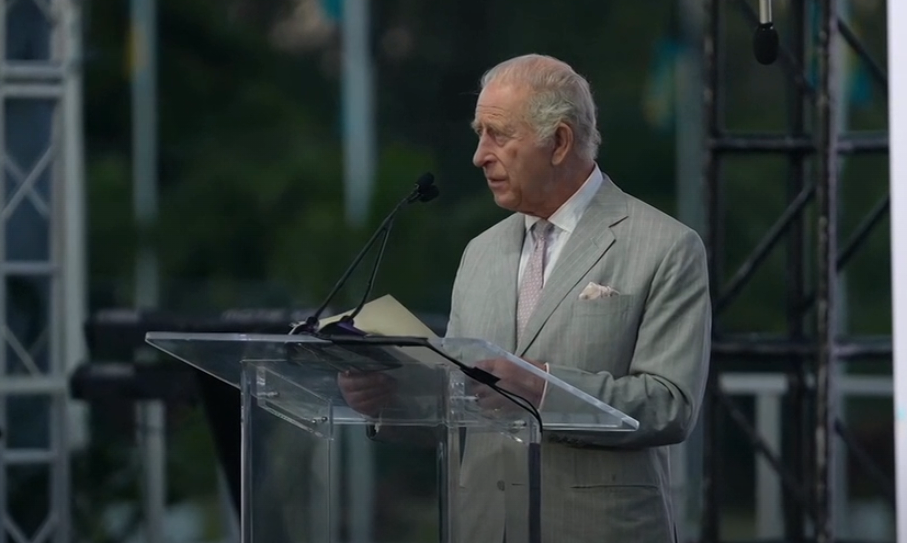
The King is expected to address the legacy of the transatlantic slavery trade with “unflinching honesty” when he opens the Commonwealth Heads of Government Meeting in Antigua next week.
Buckingham Palace has confirmed that Charles will not shy away from the “most shameful aspects of the past” during his opening address to leaders representing the 56 Commonwealth nations.
The speech will come amid renewed debate over Britain’s historical role in slavery following Prime Minister Andy Burnham’s announcement that he is open to discussions about a formal apology from the British state.
Mr Burnham announced on Saturday that he was willing to begin conversations about an apology for Britain’s involvement in the transatlantic slave trade, marking a change in approach from previous prime ministers.
However, Buckingham Palace has made clear that the King’s position remains unchanged and that he will not comment on the UK Government’s policy.
A Palace spokesperson said the King would address the issue with “sincere sorrow” but would be speaking in his capacity as Head of the Commonwealth rather than as the British monarch.
Responding to questions about the Prime Minister’s announcement, the spokesperson said it was not for the King “to address matters of particular policy relating to the UK Government’s position”.
The issue of an apology and reparations has long been raised by Caribbean and West African nations, many of which were formerly under British colonial rule.
Andy Burnham’s announcement has received a positive response from several Caribbean leaders.
Barbados Prime Minister Mia Mottley said she “recognises and appreciates” the Prime Minister’s openness to a formal apology, while Antigua’s Prime Minister Gaston Browne described the development as “significant and welcome”.
The Prime Minister of The Bahamas, Philip Davis, also welcomed the change in approach but stressed that disagreements over financial reparations remained.
Mr Davis said the wealth accumulated through the exploitation of enslaved Africans had contributed significantly to the development of Britain and other economies, while leaving “profound and lasting social, economic and institutional consequences” across the Caribbean.
Ms Mottley also acknowledged that differences remained, saying: “On reparations in particular, our views differ.”
Mr Browne added that the Caribbean’s longstanding position on reparatory justice remained unchanged.
The King’s forthcoming address follows a series of engagements in the Caribbean this week, during which he has spoken about the suffering endured by enslaved Africans.
During his visit to The Bahamas, His Majesty acknowledged the “great suffering” experienced by those subjected to slavery.
His tour has also attracted protests from campaigners calling for a formal apology and reparations, although these have been relatively small compared with the crowds who have gathered to welcome the King.
The issue has presented a diplomatic challenge for Charles, who is attending the Commonwealth summit in his capacity as Head of the organisation.
A royal source said the King was “well practised on the diplomatic tightrope”, pointing to his experience navigating complex international relationships throughout his reign and earlier decades as Prince of Wales.
Close aides have also emphasised that Charles sees his role as one of promoting and protecting Britain’s relationships with the Commonwealth and the wider world.