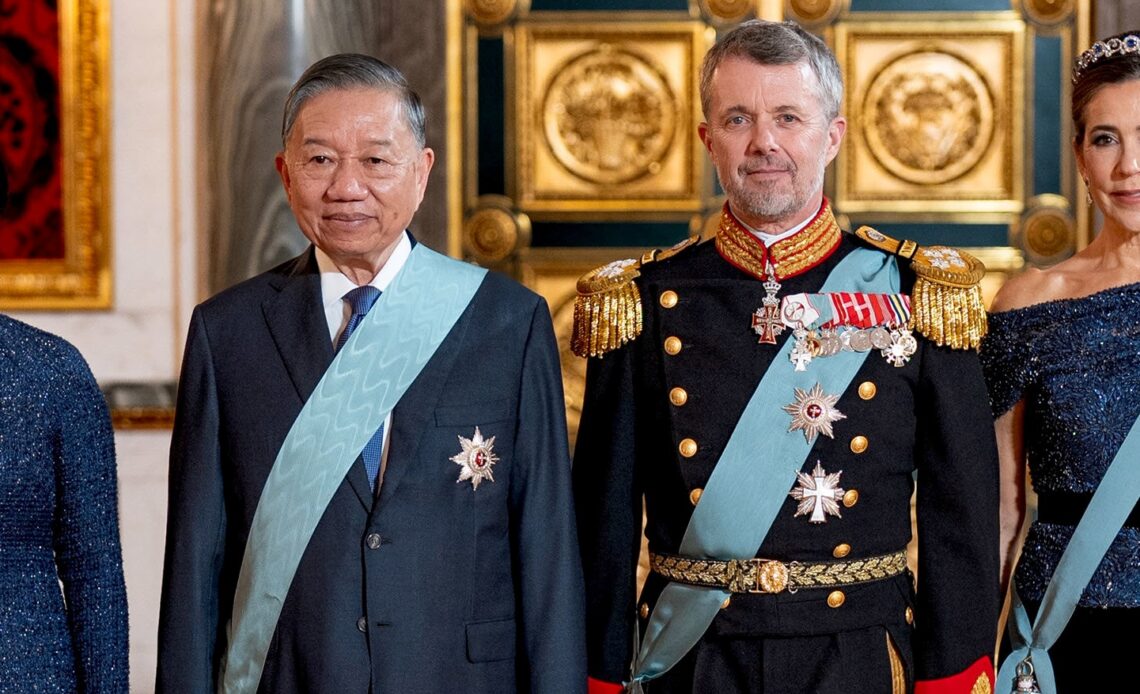
Queen Mary has just debuted another unseen royal jewel at a major event as she uses gems to freshen up Denmark’s regal image.
As she welcomed the President and First Lady of Vietnam to a glittering State Banquet in Copenhagen, Queen Mary wore a sapphire and diamond tiara that has been hidden behind palace walls for years.
It’s the third time in just two years as queen that Mary has pulled a tiara surprise. And each of her picks has made the royal image of the oldest Monarchy in Europe just that bit more modern.
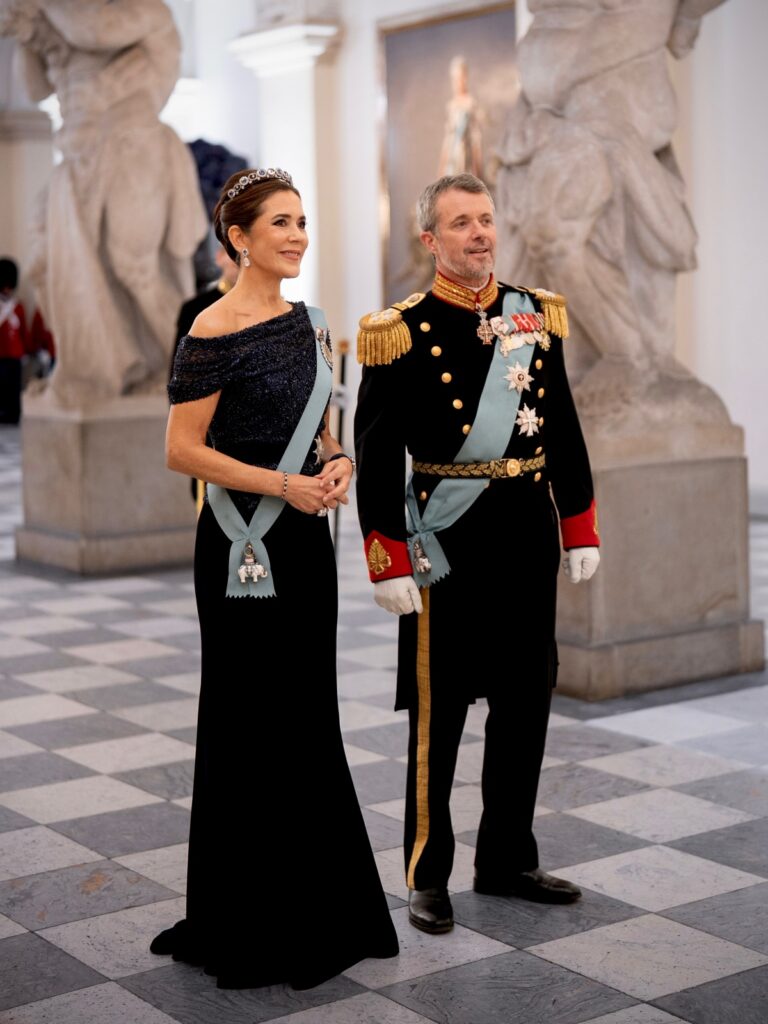
The latest new to us tiara is a bandeau style diadem and the same sleek shape as the other two new jewels that Queen Mary has worn.
All three tiaras that have become queen’s jewels under Mary’s care have had the delicate form that sees precious gems placed in a headband shape that sits across the top of the head. They are the most discreet form of tiara but the ones that Mary has chosen have all got strong links to important women in Danish royal history and so pack an histoic punch.
The sapphire and diamond bandeau that caused a royal stir on Monday was originally part of the jewel collection of Queen Alexandrine of Denmark, who was consort from 1912 until 1947. She was also the last woman to be Queen of Iceland – the country chose to become a republic in a referendum in 1944, ending the reign of Alexandrine’s husband, King Christian X, in the island.
There’s a tragic twist to this tiara’s story. It began, as many royal jewels of today did, as a wedding gift, presented at a time when princesses married heirs and were given endless gems to suit their new position and help them build a sparkling image in the run up to becoming a queen.
On her wedding day, in 1898, Alexandrine received many jewels although most were several hundred miles away from the bride at the time as her marriage took place in Cannes, France and the regal gifts were sent to Copenhagen.
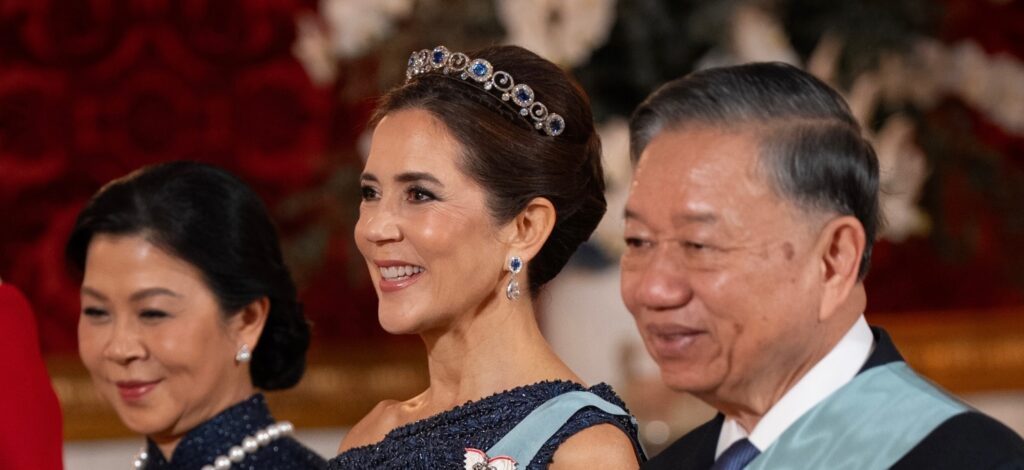
Among those sending presents were a set of diamonds and sapphires which included this tiara. They came from Nicholas II and his wife, Alexandra, the last Tsar and Tsarina of Russia. They, along with their five children, were killed in the Russian Revolution in 1917, less than twenty years after they had sent this sparkling gift to a new royal bride.
Queen Alexandrine would pass the sapphires on to the wife of her younger son. Prince Knud’s wife, Princess Caroline Mathilde, wore them often. Knud and Caroline Mathilde were, at one point, close to becoming King and Queen of Denmark until a change in the law allowed their nieces succession rights. The sapphires passed out of royal hands but were bought in 2024, months after Mary’s husband, Frederik, became King of Denmark. Now they belong once more to a queen consort.

The other bandeau tiaras that Queen Mary has introduced since her husband’s accession are just as exciting. In 2025, at a State Banquet in Finland during a State Visit, the Queen of Denmark wore a bandeau made of gold and studded with stones that were collected during a 19th century visit to Pompeii.
The gem in question first belonged to Queen Caroline Amalie who collected the stones during a Grand Tour of Italy between 1819 and 1821. Grand Tours were the height of fashion at the time with the very wealthy spending months or years visiting parts of Italy to see art and historic buildings. During her tour, taken with her husband Christian VIII, Caroline Amalie picked up the stones at Pompeii and in Rome. On her return to Copenhagen, they were set into the goold bandeau.
It was a way of showing that a Grand Tour had been undertaken. The tiara was also a lighter alternative at evening events at a time when royal women wore tiaras often in public.
Hidden away for over 150 years, Queen Mary wore it in Helsinki with a black dress featuring delicate patterns. It was a less obviously royal look at a State Banquet held in a republic, a diplomatic nod in its own way.

The first bandeau that Queen Mary surprised with following her husband’s accession is more similar to those used in several other royal houses but it comes with yet more royal history attached.
In 2024, Denmark’s royals revealed that Mary had taken some diamonds from the collection and had a brand new tiara created with them, Diamond bandeaus are a particularly popular kind of tiara around Europe and the result bears similarities to other diadems, including one favoured by Queen Maxima of the Netherlands.
The new tiara was made from rose cut diamonds that had belonged to Queen Louisa who wore them in different configurations in the 1840s.
Queen Mary had them made into a bandeau tiara and shared some behind the scenes images of how the diadem was created including a real tease which showed the gems mounted on a spring form base which elevated them above her hairline.
It could be that this form of waring them will be seen at a later date. And it seems certain that Queen Mary will continue to surprise. Her choices all have a more modern feel than the gems worn by the Queen of Denmark by tradition. Almost as soon as she became consort, Mary was seen in the emerald tiara which can only be worn by Denmark’s current queen and which can never leave the country. She also wore the famous pearl poire tiara, featuring large pearls suspended in diamond frames, within months of her husband taking the throne.
However, Mary has shown that she is ready to make the royal image much more up to date while shining a spotlight on the stories of the women who have been queen before her. That seems very royal indeed.