
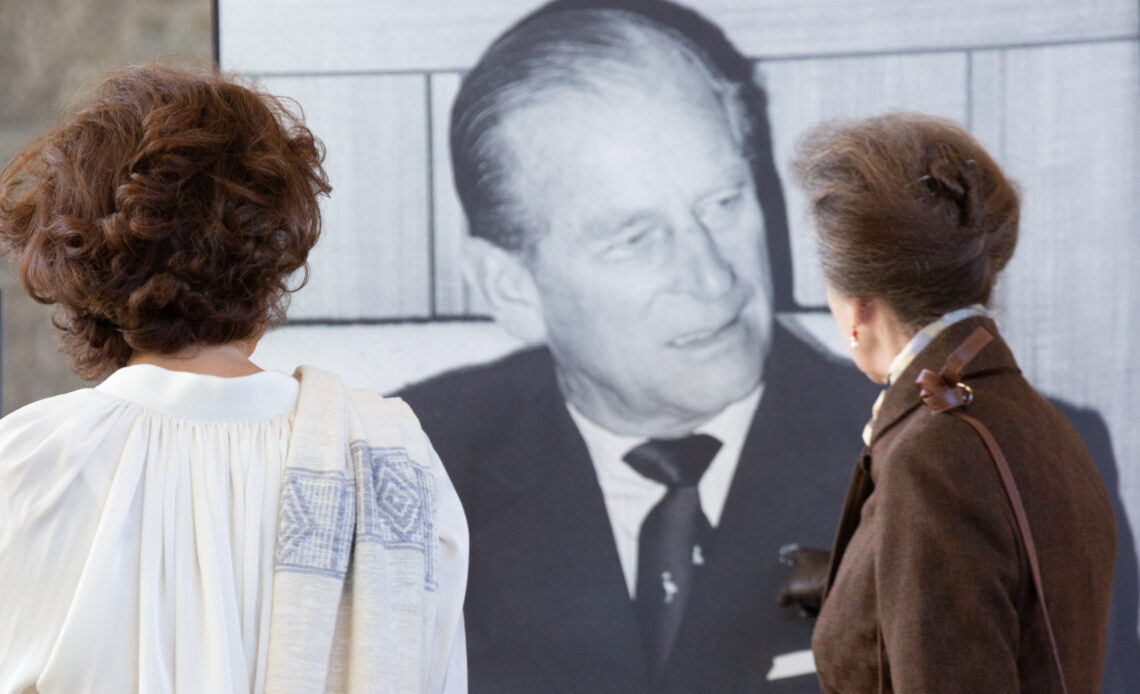
Princess Anne’s reputation as the most unsentimental and industrious member of the Royal Family is well established. Yet those who worked closely with her late father have long suggested that her steely resolve, impatience with pretension and formidable work ethic placed her in a category Prince Philip particularly admired – so much so that palace staff once joked she was “the son he never had”.
The remark, attributed to royal servants and recalled by the author Tom Quinn, reflects the unusually close bond between the Princess Royal and the Duke of Edinburgh, who died in April 2021 aged 99. Their relationship, by many accounts, was defined by mutual respect rather than indulgence, and by a shared disdain for fuss.
Anne, now 75, has never conformed to royal stereotypes. She famously declined university despite strong academic results, dismissing higher education as unnecessary unless it served a clear purpose. In interviews and documentaries she has described the assumption that everyone should go to university as “overrated”, a view that reportedly amused her father.
While her elder brother, now King Charles, followed the traditional path to Cambridge, Anne left school and became a full-time working royal at just 18. It was a decision entirely in keeping with Philip’s belief in duty, discipline and action over theory. Friends of the Duke often remarked that he admired his daughter’s willingness to get on with the job, without complaint or ceremony.
That admiration deepened through their shared love of horses. Philip, an accomplished carriage driver in later life, took particular pride in Anne’s equestrian achievements. In 1971 she won individual gold at the Burghley Horse Trials, a moment said to have delighted her father. The two spent long hours together around stables and competitions, and Anne would later take on the Duke’s carriages, continuing his legacy in the sport.
Observers also noted the similarities in temperament. Philip’s former private secretary once remarked that while Charles took after the Queen, Anne was unmistakably her father’s daughter. She adopted many of his expressions and mannerisms, and shared his dry humour and intolerance for self-importance.
During difficult periods – including the collapse of her first marriage to Mark Phillips – Anne is said to have leaned heavily on her father for support. Their bond, forged in shared interests and a similar outlook on life, only strengthened with time.
Anne’s second marriage, to Sir Timothy Laurence, was another moment that highlighted Philip’s steadfast support. Despite the low-key nature of the ceremony, he personally drove his daughter to the church near Balmoral, a private act of loyalty that spoke volumes about their relationship.
Today, Anne remains the Royal Family’s most tireless worker, a figure admired across the political spectrum for her diligence and lack of artifice. If the label of “the son Prince Philip never had” is an exaggeration, it is one rooted not in gender but in character – a reflection of the qualities the late Duke of Edinburgh valued most, and found so abundantly in his only daughter.