
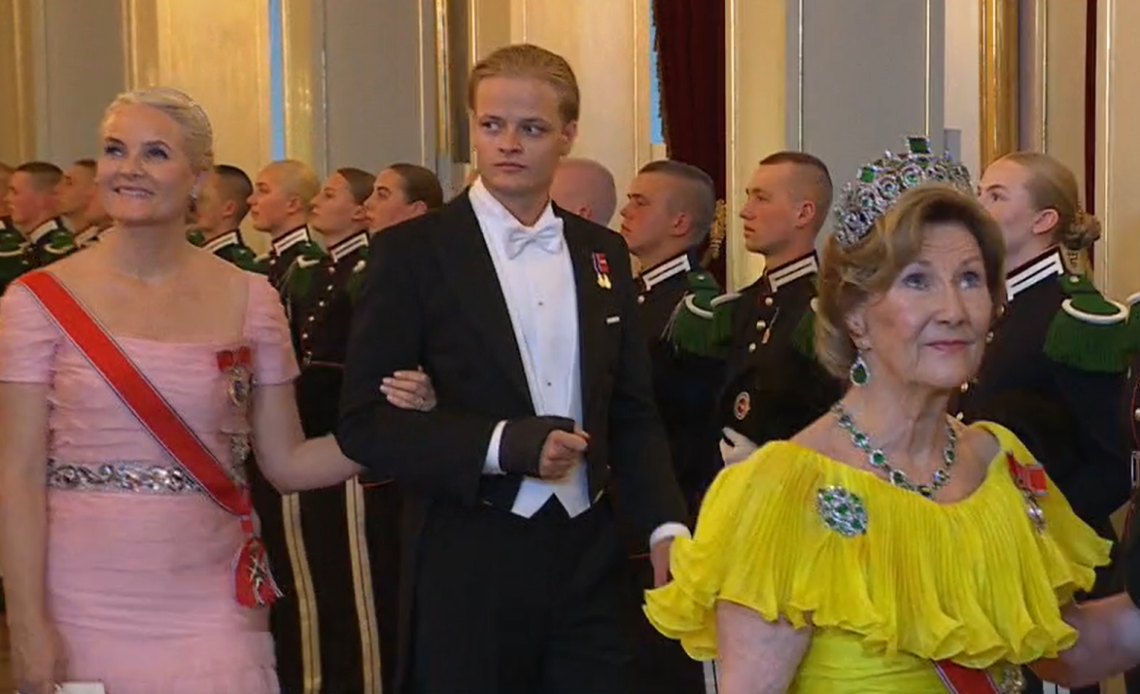
When Marius Borg Høiby enters Courtroom 250 at Oslo District Court on Tuesday morning, it will be one of the most watched appearances in modern Norwegian legal history – but also one of the least seen.
For the next seven weeks, the public will be denied any images of the 29-year-old defendant, both inside the courtroom and outside its doors. Judges have imposed a sweeping ban on photography, an unusual step for a case that has drawn media attention from across Europe and beyond. The effect is deliberate: to place a visual barrier between Norway’s monarchy and a trial that threatens to eclipse it.
Høiby, the son of Crown Princess Mette-Marit from a previous relationship, will stand alone. Neither his mother nor his stepfather, Crown Prince Haakon – the heir to the throne – will attend the proceedings. The royal household has made clear it intends to keep its distance, both physically and symbolically.
The absence will be as striking as the silence. No arrival photographs. No courtroom sketches released by the court. No images of the defendant leaving under escort. In a media age driven by pictures, Norway’s biggest criminal trial in years will unfold largely unseen.
The charges are grave. Prosecutors allege 38 offences, including four counts of rape, multiple assaults, threats against a former partner, criminal damage, drugs offences and driving violations. If convicted on the most serious counts, Høiby could face a lengthy prison sentence.
Høiby has denied the most serious accusations, including sexual offences, but has admitted to some lesser charges.
The palace has been careful – pointedly so – to stress that Høiby is not a public figure and does not carry a royal title. He appears with the family only on special occasions and, constitutionally speaking, sits outside the institution of the monarchy.
Yet the distinction feels thin. Høiby grew up within the royal orbit, has been publicly embraced by the Crown Prince as a son, and has long been familiar to the Norwegian public. To many, he is part of the family whether the palace says so or not.
That tension is now being tested in court – and in public opinion. Commentators have described the case as unprecedented in scale and sensitivity. Norway’s monarchy, widely admired for its modesty and moral authority, has never faced scrutiny of this intensity involving someone so closely connected to the crown.
The ban on images serves a dual purpose. It protects the defendant’s right to a fair trial, but it also shields the monarchy from a stream of visual associations that could linger long after the verdict. No photographs mean no defining image – no single frame that comes to symbolise the crisis.