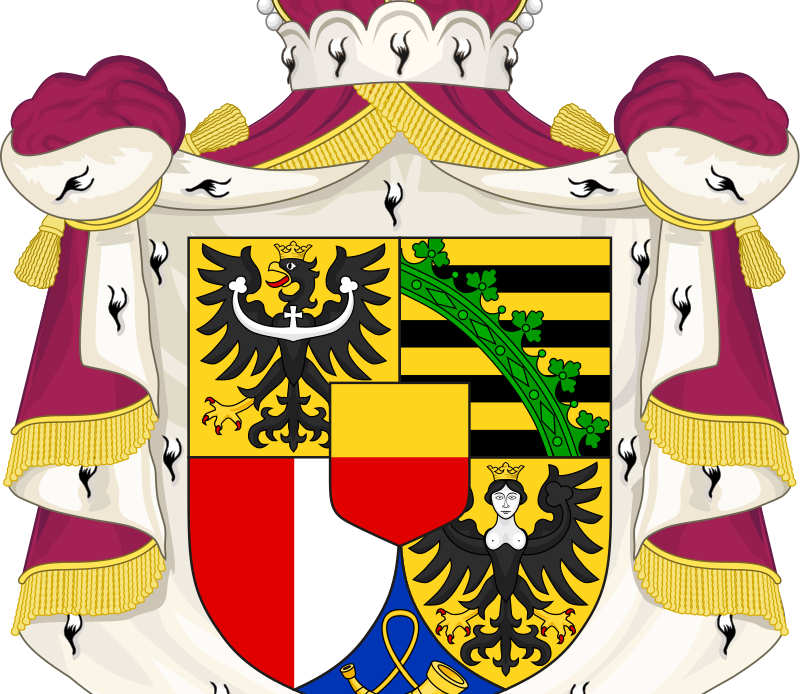
The royal family of Liechtenstein marked its national day with a major announcement that ended an historic law that once got them reprimanded by the UN.
On August 15, it was announced that women can finally succeed to the country’s throne.
The alternation comes after a shift in the ‘house laws’ that govern the ruling dynasty. Following the changes, which were approved by the necessary two thirds of those eligible to vote, the country will adopt absolute primogeniture which means that succession to the throne is determined by birth order alone.
The rules start now so princesses born before today won’t overtake any siblings in the succession.
Until today, women didn’t appear in the line of succession. The same house rules had stipulated that a woman could succeed if there was no male heir anywhere but otherwise they were barred and weren’t counted in the run up to the throne.
The current heir is Prince Alois who has also been regent since 2004, the year that Liechtenstein was criticised by a UN committee for not allowing women to succeed to the throne.
He and his wife, Princess Sophie, have four children and their eldest is a boy which means the direct succession is unaffected. Their first child, Prince Joseph Wenzel, 31, is second in the succession. Their next child, Princess Marie Caroline, has never appeared in the line to the throne. However, as new rules don’t apply to those already living, she couldn’t overtake her two younger brothers.
The official announcement said that it was important that the best prepared person inherited the throne.
The current rule of Liechtenstein is Prince Hans-Adam who handed over day to day running of the country to Alois in 2004, as is customary in the country.
The change brings Liechtenstein into line with many other European monarchies. The UK changed its rules to allow absolute primogeniture in 2012, before the birth of the first child of William and Catherine, now Prince and Princess of Wales. The new rules only applied to those born after that date. They meant that William and Catherine’s daughter, Princess Charlotte, couldn’t be overtaken by her younger brother, Prince Louis.
Only two European nations now have male primogeniture, where a man outranks a woman. In Spain, the rules aren’t a problem at the moment as the King of Spain, Felipe Vi, only has daughters with his wife, Queen Letizia. Their eldest, Princess Leonor, 20, is heir to the throne.
However, things are different in Monaco where male primogeniture still rules. The heir is Prince Jacques who was actually born several minutes after his older twin, Princess Gabriella, but he has been heir since birth.