
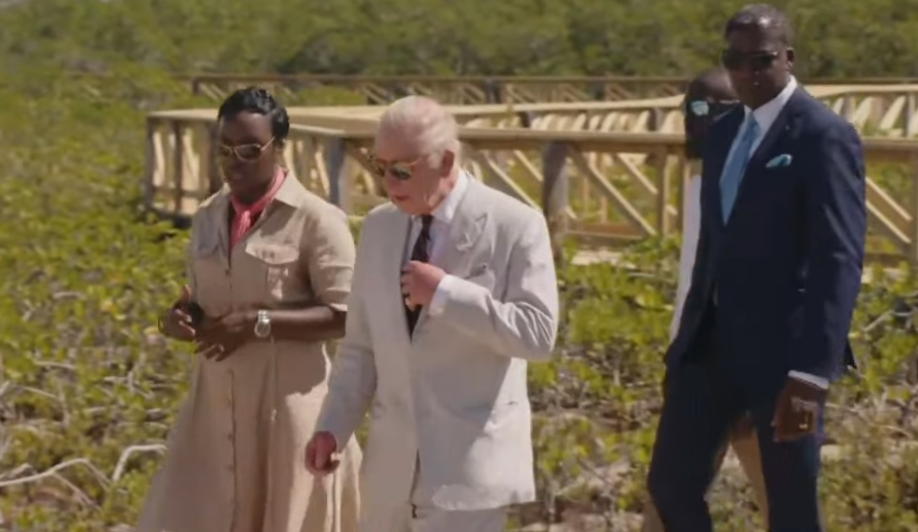
The King has highlighted the importance of protecting the Bahamas’ natural environment during a visit to a national park showcasing the country’s efforts to restore vulnerable ecosystems and strengthen resilience to climate change.
King Charles visited Bonefish Pond National Park on the second day of his Caribbean tour, where he learned about conservation projects protecting the island nation’s distinctive coastal landscapes.
As Patron of The Bahamas National Trust, His Majesty met conservationists and local representatives working to preserve the country’s natural habitats, with a particular focus on the vital role played by mangrove forests in protecting coastal communities.
The visit highlighted the environmental challenges facing low-lying island nations and the importance of safeguarding natural ecosystems for future generations.
Bonefish Pond National Park has been protected since 2002 and encompasses approximately 1,235 acres of tidal mangrove ecosystem.
Managed by The Bahamas National Trust, the site contains mangrove forests, tidal creeks and seagrass habitats that support a variety of wildlife, including fish and shorebirds.
The organisation is responsible for managing 32 national parks and other protected areas across the Bahamas, helping to conserve the country’s distinctive natural heritage.
During his visit, The King was accompanied by local politicians and representatives from conservation organisations as he explored the park’s restoration and environmental protection work.
His Majesty walked along a wooden boardwalk extending into the mangrove ecosystem, where he heard about the efforts being made to protect and manage the fragile wetland environment.
The King’s visit highlighted the important role mangroves play in protecting the Bahamas against the effects of climate change.
These coastal ecosystems help capture and store carbon, while their root systems can reduce the impact of storm surges and provide important habitats for marine life.
Mangroves also support local fisheries, making their preservation important for both biodiversity and the livelihoods of communities across the region.
For low-lying island nations such as the Bahamas, protecting natural coastal barriers is an important part of building resilience against increasingly severe weather and rising sea levels.
The visit provided The King with an opportunity to learn more about the work of those involved in restoring the park’s wetland ecosystem and educating communities about the importance of environmental stewardship.
During the engagement, the monarch also met young people participating in The Bahamas National Trust’s education and conservation programmes.
The initiatives aim to help younger generations understand the importance of protecting the natural environment and encourage them to play an active role in conservation.
The programmes form part of wider efforts to ensure that the Bahamas’ natural landscapes and wildlife are preserved for the future.
The King heard about the park’s educational work and the ways in which young people are being encouraged to understand the relationship between environmental protection, climate resilience and the long-term wellbeing of their communities.
Before concluding his visit, His Majesty planted a silver buttonwood tree, an indigenous species found in Bahamian coastal landscapes that is sometimes referred to as a silver mangrove.
The sovereign also unveiled a plaque commemorating the visit.
The engagement formed part of the second day of The King’s nine-day Caribbean tour, which began in the Bahamas on Tuesday.
The tour will continue in Guyana before concluding in Antigua and Barbuda, where Queen Camilla will join him for the Commonwealth Heads of Government Meeting.
Environmental protection is among the themes of the wider visit, with further engagements planned to highlight conservation and biodiversity across the Caribbean.