
Prince William attended the enthronement of the new Archbishop of Canterbury in line with an old tradition. It has long been the custom that the heir to the throne takes part in the ceremony, rather than the Monarch themslves.
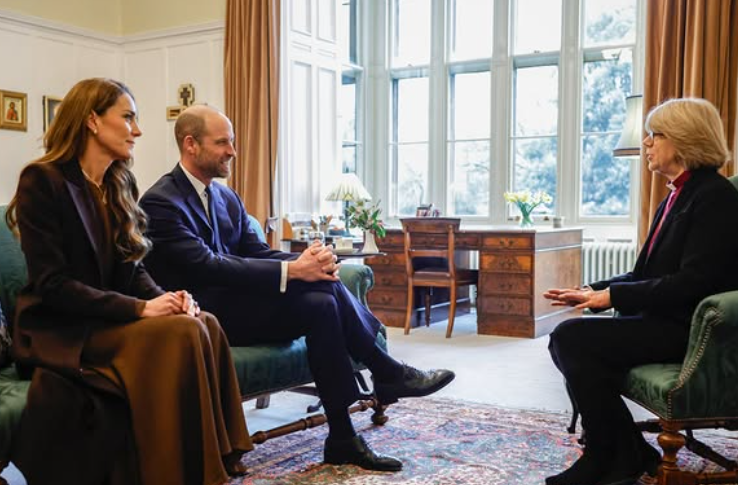
King Charles had been the first member of the Royal Family to welcome Sarah Mullally following her confirmation as Archbishop. The Prince and Princess of Wales then visited Dame Sarah, formerly Bishop of London, as she took up residence at Lambeth Palace, the official home of the Archbishop of Canterbury. And it was William and Kate who headed to the city to take part in the installation ceremony for Dame Sarah.
The attendance of the Prince and Princess of Wales at the enthronement of the new Archbishop of Canterbury on 25 March marked a significant moment in the life of both the Church of England and the Monarchy. As senior representatives of the royal family, their presence at such a historic and symbolic occasion reflected the deep constitutional and spiritual ties that continue to link the Crown with the Church.
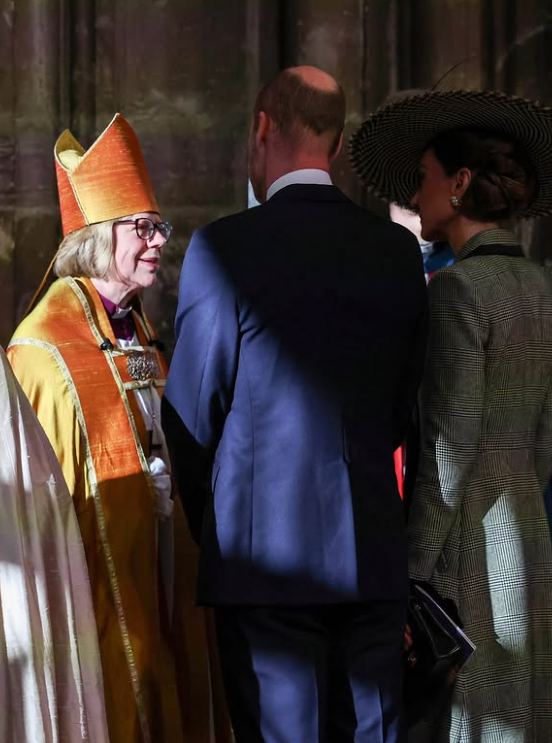
The Prince and Princess arrived in Canterbury Cathedral in blustery weather with Kate hanging on to her large, saucer shaped hat as she made her way into the ancient building. Soon after they took their seats, the first symbolic moment of the ceremony took place with the new Archbishop approaching the sealed door of the cathedral and banging on it, to request entrance. She was greeted by a group of children and told them that she was Sarah and had come to serve the Lord. It was the start of a joyful ceremony that reflected much of Sarah Mullally’s varied career including her time in nursing.
William and Kate also heard her sermon in which she reflected on her own faith journey, recalling how she had come to the Church as a teenager. It was a positive, energetic sermon. However, the new Archbishop knows she faces contention in her role. Sarah Mullally is the first woman to be Archbishop of Canterbury. She is now leader of the worldwide Anglican communion but there are some, particularly outside of England, who remain vehemently opposed to women holding any clerical position within the Church.
For that reason, this enthronement ceremony is among the most historic ever to be held. The enthronement ceremony, traditionally held at Canterbury Cathedral, is one of the most important events in Anglican life. The installation of a new archbishop is therefore not only a religious milestone but also a national event, drawing attention from across the United Kingdom and beyond. The ceremony itself is steeped in centuries of tradition, incorporating ancient rituals that emphasize continuity, authority, and service.
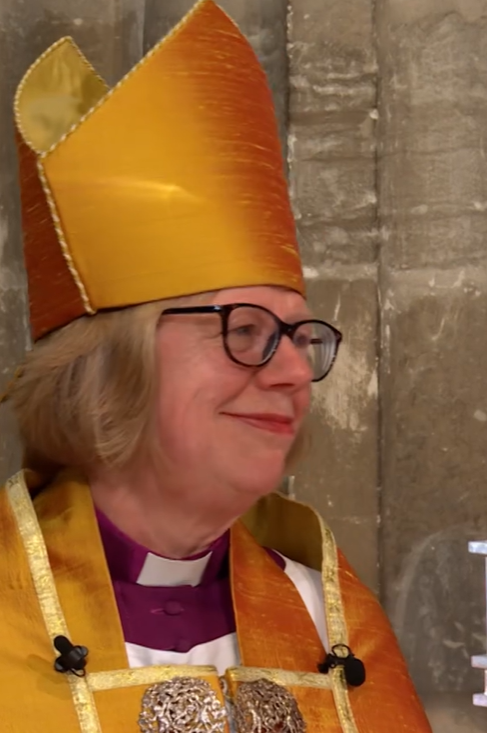
In this context, the presence of the Prince and Princess of Wales carried considerable significance. Prince William, as heir to the throne, has found his own faith in the spotlight. The sovereign holds the title of Supreme Governor of the Church, and while his grandmother, Queen Elizabeth II, was known for her deep devotion to her Christian faith and his father, King Charles III, is known for his spirituality, William’s own beliefs remain more opaque. Just days before the enthronement, the Sunday Times spoke to sources close to the Prince who revealed he has a ‘quiet faith’ and is ready to honour his commitments to the Church of England.
Senior members of the royal family frequently attend key ecclesiastical ceremonies on behalf of the Crown. By attending the enthronement, the Prince and Princess reinforced this longstanding relationship, demonstrating continuity in an era of gradual change.
At the same time, their attendance reflected the evolving nature of royal engagement. Both have developed reputations for connecting with a broad range of communities and supporting causes that resonate with modern society. Their presence at the enthronement highlighted the relevance of faith institutions in addressing contemporary issues such as social cohesion, mental health, and community support. It also underscored a shared commitment between the monarchy and the Church to remain meaningful and accessible in a rapidly changing world.
The ceremony on 25 March was not only about tradition but also about renewal. A new Archbishop of Canterbury brings fresh perspectives and priorities to one of the most influential religious roles in the country. The Prince and Princess of Wales, as representatives of a younger generation within the royal family, symbolized a parallel sense of transition. Their attendance suggested a recognition of the importance of supporting new leadership while honoring established customs.
Moreover, their participation helped to elevate the public profile of the event. Royal attendance at major national occasions often draws widespread attention, encouraging broader public interest and engagement. In this case, it highlighted the enduring significance of the Church of England within national life, even as patterns of belief and practice continue to evolve.
The setting of Canterbury Cathedral added further depth to the occasion. As the historic seat of the Archbishop of Canterbury, it has been the site of countless important moments in English religious history. Hosting the enthronement within its walls connected the present ceremony to a long lineage of spiritual leadership, reinforcing the sense of continuity that defines both the Church and the monarchy.
In conclusion, the attendance of the Prince and Princess of Wales at the enthronement of the new Archbishop of Canterbury on 25 March was a powerful expression of unity between tradition and modernity. Their presence reaffirmed the enduring bond between the monarchy and the Church of England while also reflecting a shared commitment to serving contemporary society. The occasion stood as a reminder that historic institutions can continue to adapt and remain relevant, supported by figures who represent both heritage and the promise of the future.