
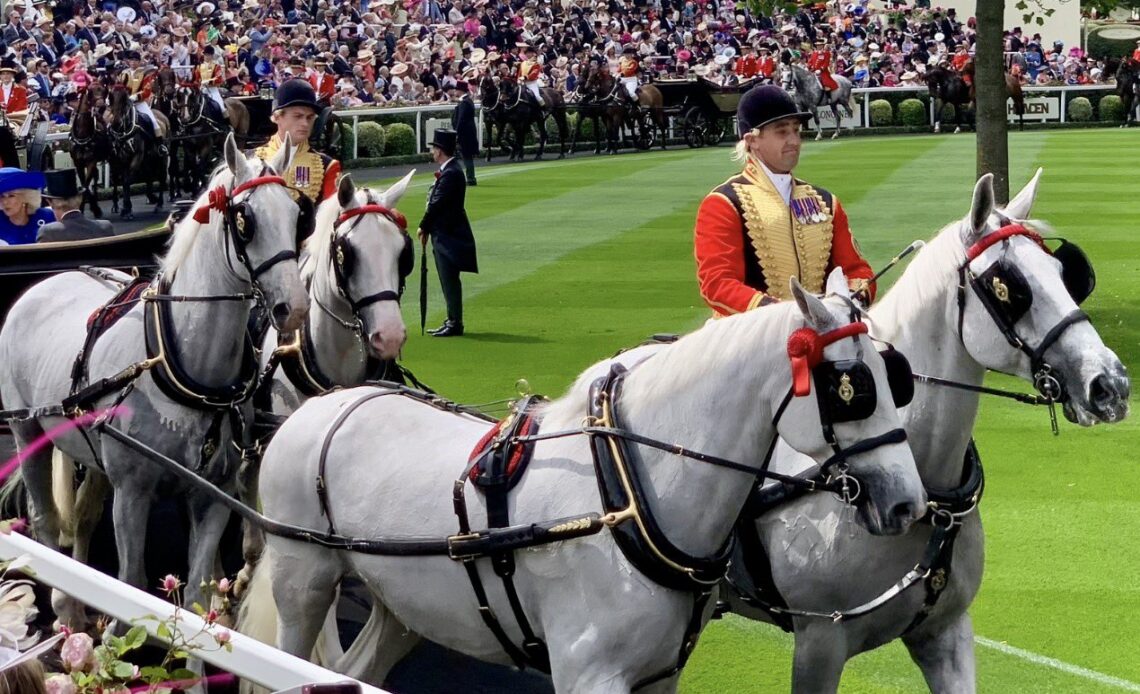
The Royal Mews is to leave its historic home at Buckingham Palace and relocate to Windsor, marking the most significant change to the monarchy’s transport headquarters in two centuries.
According to the Sunday Times, the move, long discussed privately within royal circles, reflects the changing rhythm of royal life. Senior members of the Royal Family now spend considerably less time in central London, and Windsor has become a more practical hub for both daily logistics and ceremonial planning. The shift is expected to take place over the coming year, with staff, horses and equipment transferring to new facilities near Windsor Castle.
The reorganisation coincides with the appointment of Colonel Erica Bridge, 52, who will become crown equerry this spring – the first woman ever to hold the post. Her arrival is set to coincide with the Mews’ transition to its new home, placing her at the forefront of a redesigned operation that blends tradition with contemporary demands.
Colonel Bridge, currently serving as defence attaché in Rome, was selected by the King and Queen following a formal interview process. She will take over from Colonel Toby Browne, who steps down after 15 years overseeing royal transport.
Her new role will put her in charge of a department responsible for everything from organising state carriage processions to supervising the royal fleet of cars and managing the training and welfare of the Mews’ horses and specialist staff. Horses have long played a central role in her life; away from military service she has competed as an accomplished amateur jockey, winning the Grand Military Gold Cup at Sandown Park in 2016, where Princess Anne presented her with the trophy.
Although the timing of her appointment is notable, palace officials stress that the relocation of the Royal Mews is driven by practicalities rather than symbolism. With Buckingham Palace undergoing a £369 million refurbishment, complete occupation is unlikely for several years. Even once the work is completed, the King and Queen are expected to continue living at Clarence House when in London, using Buckingham Palace primarily as the monarch’s official office and for major state events.
The refurbishment programme itself has brought thousands of hours of work from more than 220 small and medium-sized businesses, from stonemasons and plasterers to electricians, metalworkers and art handlers. To mark Small Business Saturday, the Palace publicly thanked those involved, noting that their work was helping ensure the building would remain “fit for future generations”.
As the Royal Mews prepares for its new chapter in Windsor, the combination of a landmark appointment and a logistical overhaul signals a moment of understated modernisation within the Royal Household – one in which centuries-old traditions are being re-anchored to suit the realities of a reign increasingly centred outside London.