
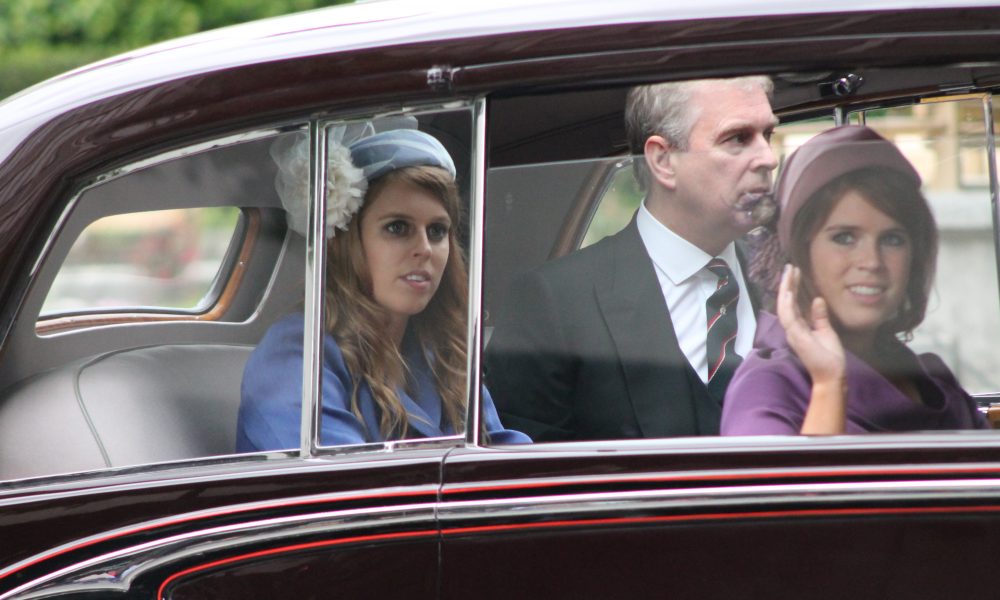
There was something quietly emphatic about the sight of Princess Beatrice and Princess Eugenie arriving together at Buckingham Palace for the King’s pre-Christmas lunch. No speeches were made, no statements issued, yet the message was unmistakable: the controversies of the father will not be inherited by the daughters.
While Prince Andrew was photographed riding alone in the rain at Windsor, his daughters were photographed doing something far more consequential – stepping back into the royal fold. In an institution that trades in symbolism, this was not accidental. Attendance is currency, and presence is endorsement.
For several years now, Beatrice and Eugenie have existed in a kind of constitutional limbo: not working royals, yet not quite private citizens either; loyal daughters, but daughters of a man whose name has become shorthand for reputational damage. Every public appearance has therefore carried an unspoken question – are they being unintentionally punished for Andrew’s public controversy, or carefully insulated from it?
This week’s answer was clear. They are to be insulated.
The King’s Christmas lunch is not a casual family meal but a curated guest list, one that signals who remains within the perimeter of royal acceptability. Andrew’s exclusion from that perimeter is now total and unambiguous. Yet his daughters’ inclusion sends the opposite signal: whatever their private feelings, the monarchy will not permit guilt by association.
That distinction matters. Beatrice and Eugenie have not sought to defend their father publicly, nor have they attempted to launder his reputation through visibility. Instead, they have pursued something more delicate – continuity without complicity. By returning to Buckingham Palace while Andrew remained conspicuously absent, they demonstrated that the family line can be drawn without being erased.
It is also a tacit acknowledgment of reality. Andrew’s return to formal ceremonial life is not merely unlikely; it is institutionally impossible. He has of course denied all wrongdoing, but The King understands that the cost of allowing him back into ceremonial life would be borne not by Andrew himself but by the Crown. Yet punishing his daughters indefinitely would achieve nothing beyond needless collateral damage.
For Beatrice and Eugenie, this was less a festive outing than a quiet act of self-preservation. Their attendance was a reminder that they are not on trial, and that their futures – personal, professional, and familial – are not to be held hostage to their father’s legacy.
The optics were carefully balanced. Andrew, alone and rain-soaked at Windsor, embodied the permanence of his exile. His daughters, composed and present at the Palace, embodied something else entirely: the monarchy’s determination to move on without pretending that nothing has happened.
This was not forgiveness. It was separation. And in royal terms, that is as decisive as it gets.