
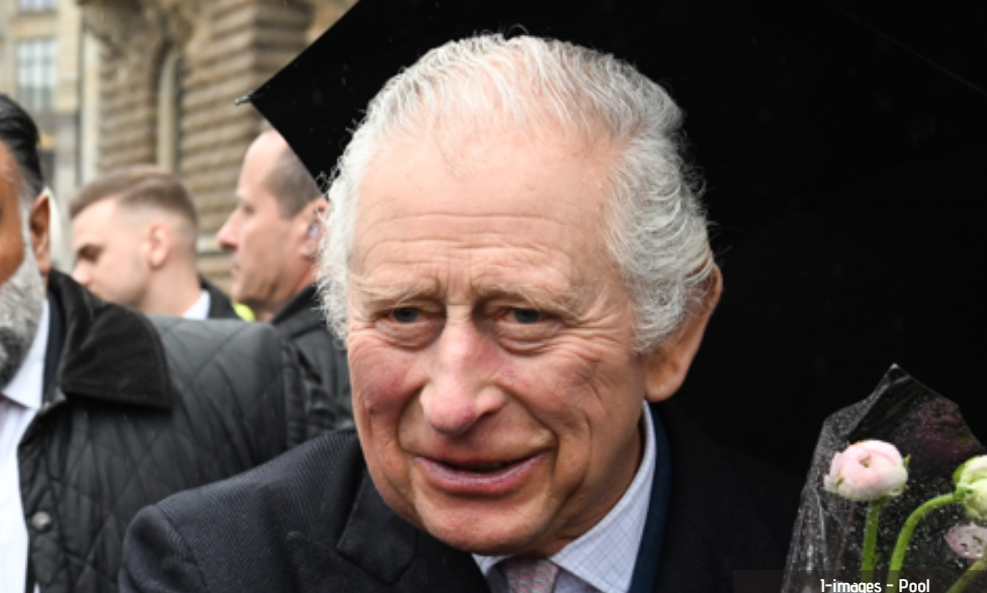
There is a rather peculiar idea doing the rounds in royal gossip circles once again: that King Charles is about to abdicate and hand the throne to Prince William. Apparently, the public should start preparing for a new King as early as next year. There is just one rather significant problem with these claims. There is virtually nothing to substantiate them.
Reports suggesting the King could step aside within months have begun circulating internationally, with some international tabloids claiming his health is considerably worse than the public has been led to believe. Others have suggested that his recent Caribbean tour has prompted discussions about an early transfer of the Crown to his eldest son.
The source of much of this speculation appears to be RadarOnline, which has cited unnamed royal insiders making increasingly dramatic assertions about the King’s health and his supposed plans to relinquish the throne.
Yet there has been no announcement from Buckingham Palace, no indication of any constitutional preparations and no credible evidence that an abdication is being contemplated.
Instead, a series of publications have taken unverified claims, repeated them and given them an increasingly authoritative appearance through repetition.
It is worth remembering that King Charles has been open about his cancer diagnosis. Buckingham Palace announced in February 2024 that the King was undergoing treatment, and in December 2025 it was revealed that his treatment schedule could be reduced following a positive response.
The King has continued to undertake official duties, including a demanding overseas programme. His nine-day Caribbean tour, which included visits to the Bahamas, Guyana and Antigua and Barbuda, was undoubtedly a substantial undertaking. But describing an overseas visit as exhausting is hardly evidence that a sovereign is preparing to surrender his Crown.
Indeed, a Buckingham Palace aide described the visit as complex and challenging, but also emphasised its success and the King’s demonstration of statecraft. There is a rather large difference between acknowledging the demands of royal duties and suggesting that the King is about to abandon them altogether.
This is not the first time we have witnessed this particular brand of speculation. Queen Elizabeth II spent decades facing rumours about her future, her health and the possibility that she might eventually hand the throne to Charles.
For years, suggestions that the then Prince of Wales would become King before his mother’s death appeared with remarkable regularity. Various commentators confidently predicted that the Queen would step aside, particularly as she grew older and reduced her programme of engagements.
She never did.
The late Queen remained sovereign until her death in September 2022, having served for more than 70 years. Her determination to fulfil her duty was never particularly difficult to understand. She had made a promise to serve her country throughout her life, and she intended to honour it.
There is little reason to believe that King Charles, who waited longer than any heir in British history to become monarch, is suddenly preparing to walk away from the position he spent a lifetime preparing for.
Of course, Charles is not Elizabeth. He has his own health challenges, and nobody should pretend that a cancer diagnosis is insignificant. But there is a considerable difference between acknowledging the realities of his health and inventing a succession timetable based on anonymous briefings.
Perhaps the most extraordinary aspect of these reports is the suggestion that an abdication would somehow be the obvious solution because Prince William is waiting in the wings.
This is where a rather fundamental misunderstanding of monarchy seems to creep into the discussion.
The monarchy is not the X Factor. It is not a television competition in which viewers get to vote for their favourite contestant and decide who should take the crown.
You do not get to choose your King.
The British monarchy is, by its very nature, an undemocratic institution. The Crown passes according to established rules of succession, not popularity polls, public sentiment or the latest social media discussion.
There may well be people who would prefer Prince William to become King sooner rather than later. There may even be people who believe he would make a better monarch than his father. That is an entirely legitimate opinion to hold.
But it is not how the monarchy works.
Prince William is heir to the throne. He is not a candidate waiting for the public to elect him, nor is his father’s position a temporary appointment that can be transferred simply because another member of the Royal Family might enjoy greater popularity.
King Charles is the sovereign. Unless he chooses to abdicate, he remains the sovereign. His position is not dependent on whether commentators, royal enthusiasts or sections of the public think it is time for a change.
The last British monarch to abdicate was Edward VIII in 1936. His decision was an extraordinary constitutional event, prompted by his determination to marry Wallis Simpson. It was not a routine transition, nor was it something undertaken simply because his successor was considered ready for the job.
An abdication would have enormous constitutional and personal implications. It is not a decision to be casually predicted by anonymous sources speaking to celebrity gossip publications.
There is, of course, nothing wrong with discussing the future of the monarchy or considering how Prince William might eventually approach his reign. His eventual succession is inevitable, and the institution will one day enter a new chapter.
But there is a difference between discussing the future and manufacturing a story about an imminent abdication.
For now, King Charles remains on the throne, continues to undertake public duties and has given no indication that he intends to surrender the Crown.
Until there is something more substantial than anonymous claims and recycled speculation, reports of his impending abdication deserve to be treated with considerable scepticism.