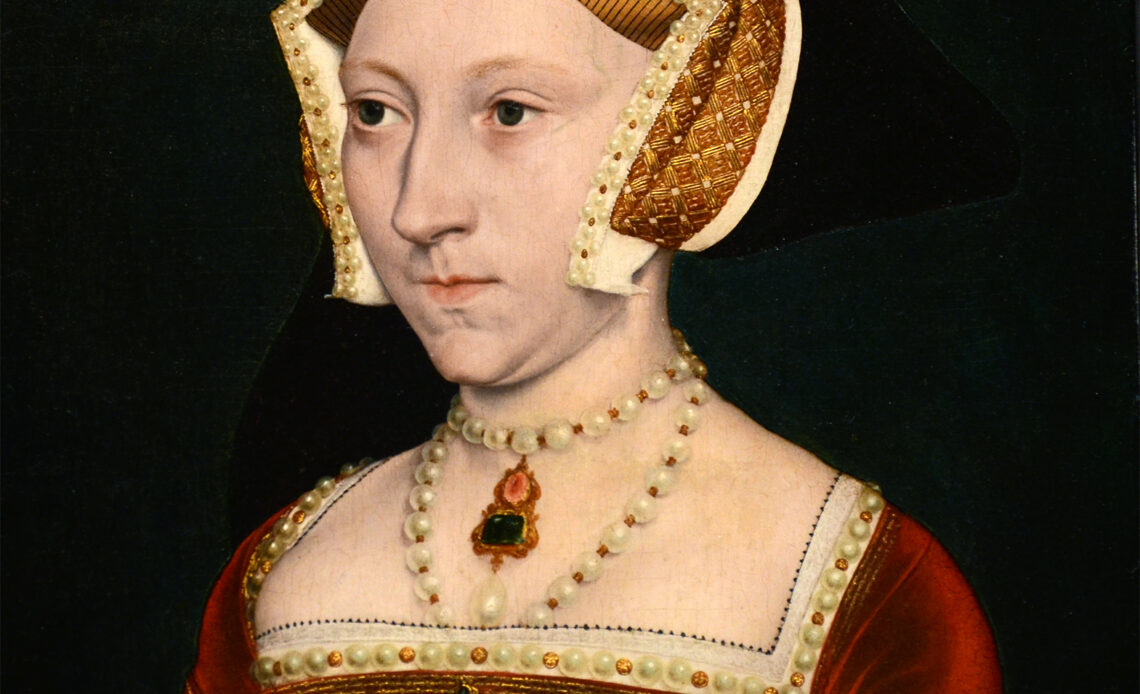
She was the queen who gave Henry VIII the son he so desired but Jane Seymour’s story had far from a happy ending. The consort died just a few days after presenting the Tudor monarch with his longed for male heir and is now said to haunt one of the most famous royal residences in the world – Hampton Court Palace.
In the early hours of October 12th 1537, Henry VIII received the news he had waited for throughout much of his reign. He was the father of a healthy son. The queen who had made this dream come true was recovering in her rooms after a long and difficult labour. The baby prince was christened Edward three days later amidst huge celebrations. His mother wasn’t present, as was the custom. But Jane’s absence also concealed a far more worrying truth, she was becoming seriously ill.
On October 24th 1537, when her son was just twelve days old, Jane died in her rooms at Hampton Court Palace. Several causes of death have been suggested including puerperal fever, the bacterial infection that affected and killed so many women who had just given birth in Tudor times. Henry was devastated by her death and wore mourning for months afterwards. He would wait almost three years before marrying again.
The court, too, was plunged into deep mourning while Jane and Henry’s baby son was raised by governesses and wet nurses in his early months. Henry would wrap the little boy in cotton wool, such was his desire to protect his much desired male heir.
But what of Queen Jane, who was consort for just 15 months and who had come to the throne in tumultuous circumstances. She had caught Henry’s eye in 1535 and by the spring of the following year, he had ordered the arrest of his second wife, Anne Boleyn. Queen Anne was sent to the Tower and executed there on 19 May 1536. On 20 May 1536, Henry announced his betrothal to Jane Seymour and they were married ten days later. Henry had begun May with one queen at his side and ended it with another as his consort.
Jane’s time as queen was far from calm. Although the king doted on her, she was part of a powerful family who saw her marriage as a chance to increase their influence, much to the chagrin of other advisers, Religious unrest was also bubbling around the country as Henry continued the changes of the Reformation which included tearing down the monasteries and establishing his own Church of England.
Queen Jane famously kept out of politics although she did spend a lot of time promoting the cause of her elder stepdaughter, Princess Mary. However, she became pregnant within a year of her marriage and was indulged and protected by the king as he waited in hope for a son to be born. Just twelve days later, his joy turned to grief on Jane’s death.
Jane’s ghost is said to return to Hampton Court where she passed away. For centuries, residents and visitors have reported seeing a pale woman on the Silverstick Stairs at the Palace which lead to the room where Jane gave birth to her son and where she died. Her ghost is seen on the anniversary of Edward’s arrival. There are reports of a pale woman appearing on the anniversary, holding a lighted candle.
The queen who gave this demanding king the one thing he wanted more than anything in the world was buried at St. George’s Chapel, Windsor and when Henry himself died, a decade later, he was laid to rest next to her.
Lydia Starbuck is a pen name of June Woolerton who has written extensively on royal history. Her book, A History of Royal Jubilees, is available now as is her latest historical work, The Mysterious Death of Katherine Parr. She is also the author of a popular cosy mystery, All Manner of Murder.