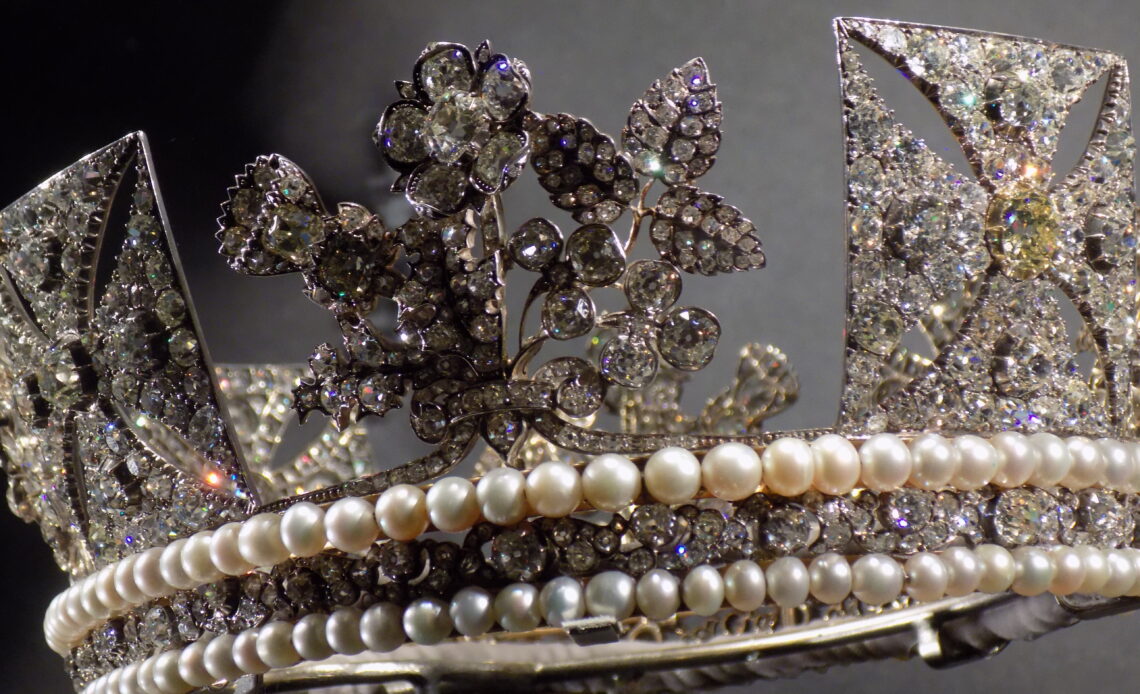
A stunning diamond coronet that has been worn by some of the most famous queens in British history is about to become the star turn in a landmark royal exhibition that will open in London.
The George IV diadem will be one of the main attractions in the brand new show, Royal Jewellery: from Coronations to Keepsakes which takes place at The King’s Gallery next to Buckingham Palace next year.
The show, starting in June, will feature over 300 pieces of royal jewellery from across 500 years of regal history. Among the pieces being shown are cufflinks that are said to have been worn by King Charles I on the day he was executed as well as a bracelet made of pebbles that was presented by Prince Albert to Queen Victoria.
At the heart of the show will be the stories of the queens, consort and regnant, whose lives have shaped royal history. A coronet that was worn so often by Queen Victoria that it became emblematic of her reign and was placed on her coffin as it lay in state, will also be part of the exhibition.
However, the star power of the George IV Diadem is central to the show. The piece is still in regular use – Queen Camilla wore it to the State Opening of Parliament just a few months ago and it was one of the most familiar pieces used by Queen Elizabeth II, who chose it for her first portraits after her accession.
However, as its name suggests, it was made for a king to wear and it was a dispute between brothers that meant it passed to the collection of queens.
George IV had the diadem made in 1820 as he finally ascended the throne after over fifty years as heir to the throne and ten as regent. The gold and silver frame is decorated with over 1,300 diamonds and its design was rather modern at the time. Around the central cross, the new king had the gemstones worked into the four symbols for England, Ireland, Wales and Scotland rather than traditional heraldic symbols.
It could be seen as a canny move by George who was constantly criticised for his excessive spending. This diadem, which was worn by the king on the way to his coronation in 1821, helped to underline his position at the heart of his new realm. However, his coronation cost more than any other and when he died nine years later, his successor was determined not to follow in his footsteps.
After George IV’s death, the throne passed to his younger brother, who became King William IV. He was dead set against all manner of things that had made his older brother tick. William was in his sixties (he would be the oldest person to become monarch until 2022 when King Charles III broke the record) and he had put aside his extravagant ways. In fact, following his marriage to the very sensible Queen Adelaide, he was turning into a bit of a penny pincher. He didn’t want a coronation at all and when he finally did agree to one, he cut costs so dramatically that he was teased for it in the press.
William was also very down to earth and, to honour his long naval career, chose to walk in wearing a naval uniform rather than the traditional breeches and flowing shirt. There was no way he was wearing the coronet. And so, it passed into the jewellery collection marked ‘queens only’. Every consort since has worn it as have the two queens regnant, Victoria and Elizabeth II.
In fact, Elizabeth II usually wore the King George IV State Diadem for the procession to and from the Palace of Westminster for the State Opening of Parliament. Towards the end of her reign, Her Late Majesty chose to wear this gem throughout the State Opening while the heavier Imperial State Crown was instead carried before her into the House of Lords on a red velvet cushion and placed by the throne as a symbol of royal power.
The diadem itself is much lighter than the State Crown but is still a highly symbolic piece of jewellery. It was also among the most familiar signs of Elizabeth II’s reign as she was shown wearing it on the portraits used on stamps and coins in Britain and the Commonwealth.
Since 2023, it has been worn by Queen Camilla. Her Majesty wore it to her Coronation, arriving at Westminster Abbey with the diadem on her head. It was removed before she was crowned with the jewel now known as Queen Camilla’s Crown (it had originally been used by Queen Mary, consort of King George V, and had been known as her crown until then).
The jewel will be on display for nine months. It has been included in previous summer exhibitions, including the display of jewels that were a central part of the Platinum Jubilee celebrations in 2022.
The new exhibition, From Coronations to Keepsakes, is set to prove popular and tickets go on sale on the Royal Collection Trust website in the first days of November.