
Queen Camilla has spoken for the first time about the emotional strain of keeping King Charles’s cancer diagnosis secret in the days before his illness was publicly announced.
The Queen revealed that she was “longing to let it out” while carrying out an official engagement at a cancer support centre, knowing that her husband had recently been diagnosed with cancer.
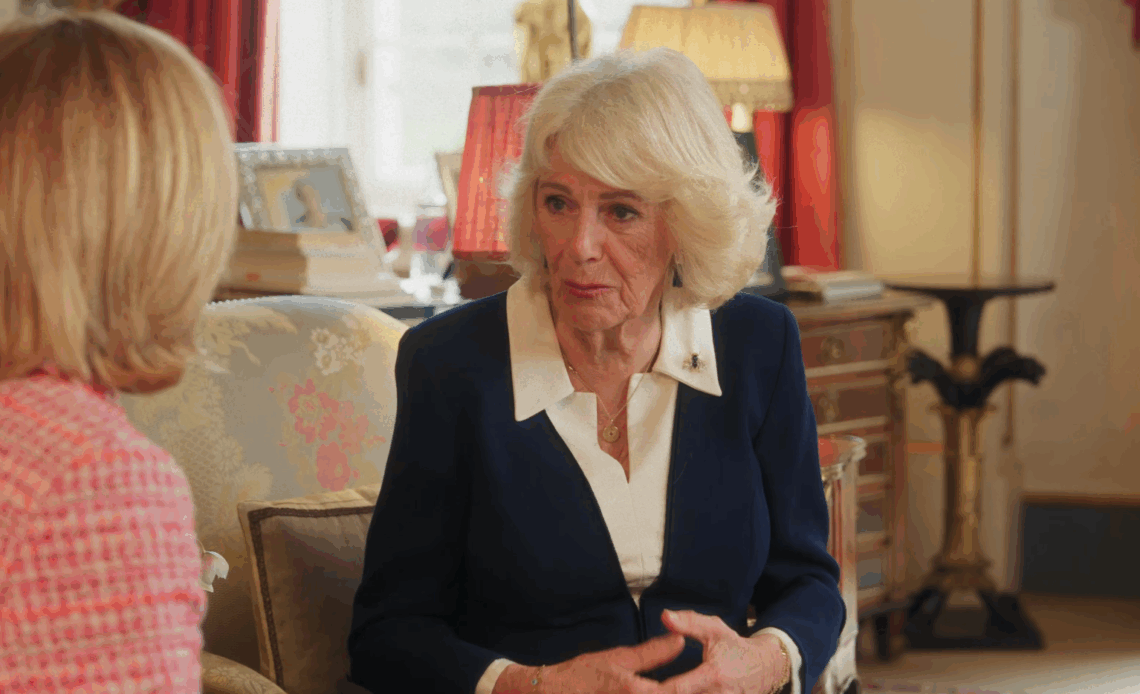
Camilla was speaking in a special seven-minute film released to mark the 30th anniversary of Maggie’s, the cancer charity of which she is President.
The conversation, filmed at Clarence House with Maggie’s chief executive Dame Laura Lee, saw the Queen reflect on a visit she made to a new Maggie’s centre at the Royal Free Hospital in London on January 31, 2024.
At the time, Camilla had recently learned that King Charles had been diagnosed with an undisclosed form of cancer and would require treatment.
However, the diagnosis had not yet been made public and The Queen was unable to discuss it during her visit.
“I remember coming to see a Maggie’s just after the King being diagnosed. Nobody could say anything at the time. That was quite difficult,” Camilla recalled.
“I almost said something but, you know, I felt that it wasn’t the time to say.”
The Queen admitted that she was desperate to tell someone what was happening.
“I was just longing to let it out but obviously I couldn’t,” she said.
Charles’s diagnosis was announced by Buckingham Palace on February 5, 2024, just five days after Camilla’s visit to the Royal Free.
The King had initially been receiving treatment for an enlarged prostate, with his cancer diagnosis discovered during subsequent medical care.
Charles has never publicly disclosed the type of cancer he has.
More than two years after the diagnosis was announced, the King continues to receive treatment, with Buckingham Palace saying his health remains on a positive trajectory.
During the film, Camilla also reflected on the impact of suddenly becoming a relative of someone with cancer.
She said that while visiting Maggie’s centres previously, she had spoken to patients and their families without having the same personal connection to their experiences.
But following Charles’s diagnosis, that changed.
“I looked at everybody who was suffering and all the relations and I think it made me realise even more how important these places were,” she said.
The Queen said she found herself approaching conversations with patients differently during the Royal Free visit.
“I was almost questioning them. I didn’t want to pry too deeply,” she explained.
“But normally when I went in, I was just talking to them, but I don’t know, I felt it was much more deep.”
Camilla also spoke about Charles’s determination to continue with his public duties despite undergoing cancer treatment.
“Look at my husband. Nothing stopped him,” she said.
“He just said, ‘This is my way. I’m going to cope with it.’”
Charles returned to public-facing engagements in April 2024, less than three months after beginning treatment.
Camilla also recalled the personal impact of suddenly finding herself caring for her husband while trying to understand the illness.
“It had never really come back to roost at home, and suddenly your husband is diagnosed, and you think ‘Goodness I’ve been talking to all these people and now I’m the one with some relation, who’s got to help to look after my poor husband and try and understand it all,’” she said.
The Queen has used her position as Maggie’s President to champion greater support for people affected by cancer, including relatives and friends.
She called for every hospital to have a Maggie’s centre, highlighting the importance of providing support not only to patients but also to those caring for them.
Maggie’s currently operates 27 centres across the UK, located alongside NHS cancer hospitals.
The charity provides free psychological, emotional and practical support to people with cancer and their loved ones, with its centres available without an appointment.
The King’s decision to speak publicly about his diagnosis has also had a wider impact.
Maggie’s said his announcement prompted a 12 per cent increase in men contacting the charity after receiving a cancer diagnosis.