
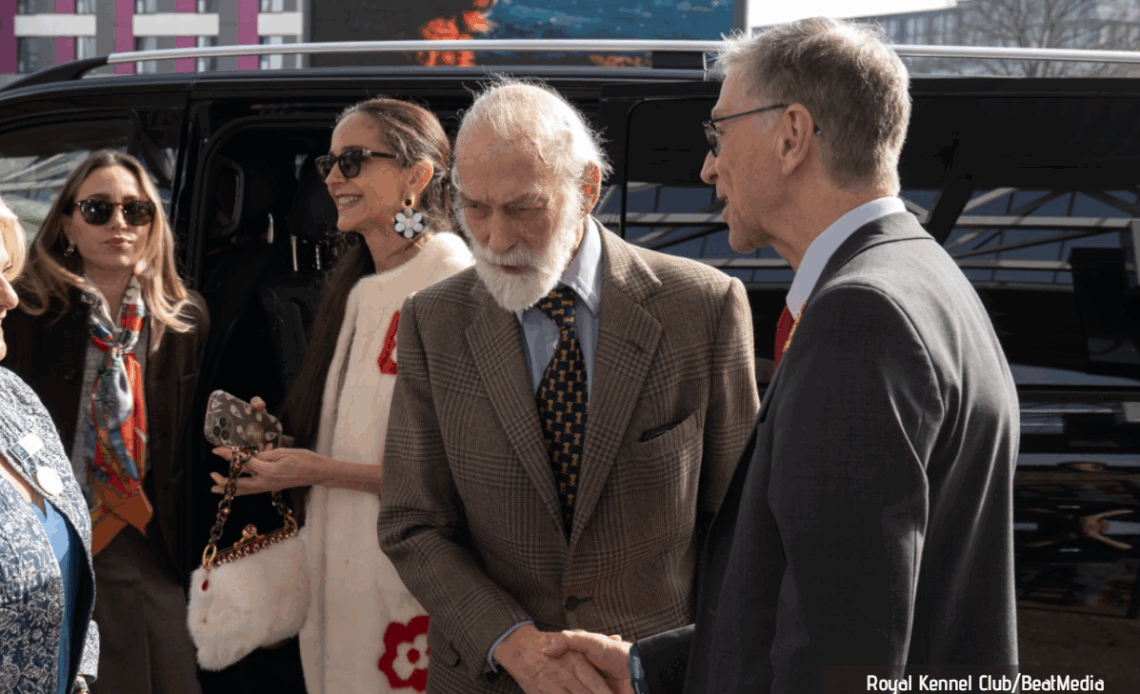
Prince Michael of Kent has been seen carrying out a public engagement despite reports that his wife, Princess Michael of Kent, is seriously ill after suffering a stroke.
The 83-year-old royal travelled to Birmingham to attend the opening of the world-famous Crufts, where he met competitors and their dogs at the four-day show.
A lifelong enthusiast for dogs, the prince has served as president of The Royal Kennel Club since 1982. During his visit he was seen greeting exhibitors and spending time with several of the animals competing at the event, including a border collie.
In a statement shared online, the Kennel Club said it had been “honoured” to welcome the prince, describing his visit as recognition of the dedication and expertise behind the sport of dogs as well as the continuing focus on canine health and responsible ownership.
The appearance comes at a difficult time for the family. Friends recently said that Princess Michael, 81, had suffered a stroke and was now bedridden.
The couple, who live at Kensington Palace, have endured a series of challenges in recent years. The princess previously broke both wrists in a fall on the palace stairs while carrying a number of coats, leaving her temporarily unable to carry out everyday tasks.
Her health struggles followed heart surgery and came after the death of her son-in-law, Thomas Kingston, who was married to their daughter Lady Gabriella Windsor.
Despite their advancing years, Prince Michael and his older brother, Prince Edward, Duke of Kent, have continued to appear at engagements and royal gatherings. Both men, who are first cousins of the late Queen Elizabeth II, remain regular figures at ceremonial occasions and charity events.
Born in 1942, Prince Michael is the son of Prince George, Duke of Kent and Princess Marina of Greece and Denmark. At the time of his birth he was seventh in line to the throne, though he now stands much further down the succession.
Although not a working royal, he continues to support a number of organisations and charitable causes. Before the pandemic he was said to attend as many as 200 engagements a year, funded largely through private consultancy work rather than the Sovereign Grant.