
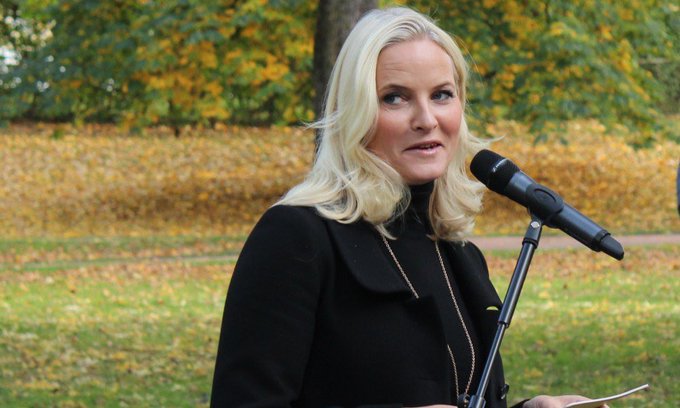
Norway’s prime minister has crossed a line rarely even approached in the country’s modern political history, openly commenting on the conduct of a senior member of the royal family and in doing so exposing the fragility of an unwritten constitutional convention.
Jonas Gahr Støre said this week that Crown Princess Mette-Marit had shown “poor judgment” in her past contacts with Jeffrey Epstein, aligning himself with the royal palace’s own apology but nonetheless making a public intervention that many in Oslo regard as without precedent. Sitting prime ministers have traditionally avoided any direct assessment of the behaviour of working royals, regardless of controversy.
The extraordinary nature of the moment was underlined by reaction from journalists and constitutional watchers. One Norwegian reporter wrote on social media: “Norway’s PM Jonas Gahr Støre commented today that Crown Princess Mette-Marit had shown poor judgment following revelations about connections to Epstein. Unprecedented coming from a sitting PM about a member of the royal family. I can’t recall having seen anything like this.”
Such reactions reflect a deeply ingrained political culture. Although the monarch reigns but does not rule, ministers are careful to preserve a strict separation between elected authority and the royal household. Criticism, when it arises, is usually channelled indirectly or left to the media and the palace itself.

Støre was careful in his wording. He did not accuse the crown princess of wrongdoing and made clear that inclusion in the Epstein files did not imply criminal conduct. Yet by publicly endorsing her admission of error, he departed from the long-standing practice of ministerial restraint, lending the weight of government to what would normally be treated as a private royal matter.
The timing of the intervention has sharpened its impact. The revelations about Epstein emerged just days before the start of a high-profile criminal trial involving Mette-Marit’s son, Marius Borg Høiby, placing the royal family under intense public scrutiny. Against that backdrop, the prime minister’s comments appeared to acknowledge – rather than deflect – public unease.
Støre extended the principle further by criticising a former prime minister, Thorbjørn Jagland, for what he also described as poor judgment after planning, and later cancelling, a holiday on Epstein’s private island. In doing so, he framed the issue not as a singular royal lapse, but as a broader failure of discernment among figures at the highest levels of public life.
Whether the episode marks a one-off response to an exceptional situation or a subtle recalibration of how openly Norway’s political leaders speak about the royal family remains an open question. For now, the significance lies less in what Støre said than in the fact that he said it at all.