
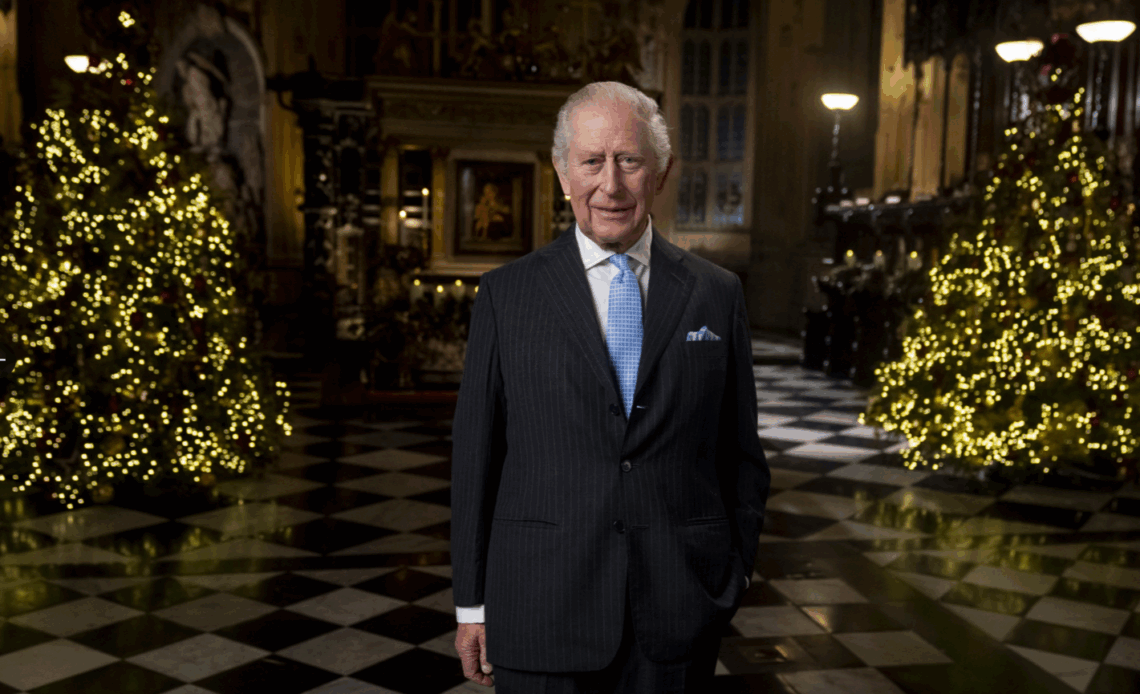
For decades, the Christmas broadcast has been a ritual closely associated with the grandeur of royal residences. Buckingham Palace, Sandringham, Windsor Castle – these have served as the familiar backdrops for the sovereign’s reflections on faith, family and the nation. King Charles III, however, is quietly redrawing that map. Since ascending the throne, he has increasingly chosen sacred, publicly shared spaces over the private, gilded rooms of the monarchy.
In 2024, the King delivered his Christmas message from the Fitzrovia Chapel, a modest former hospital chapel in central London. Its understated beauty and history of service offered a striking contrast to the formal opulence of a palace. The choice underscored Charles’s long-standing interest in community, care, and connection with the public, signaling a desire to meet the nation in a space that belongs as much to ordinary citizens as it does to ceremonial tradition.
The trend continues in 2025. The King will speak from the Lady Chapel of Westminster Abbey, a site steeped in royal history yet open to pilgrims and worshippers. Built by Henry VII and housing the tombs of fifteen kings and queens, the chapel is a place where monarchy, spirituality and national memory intersect. By stepping away from palace walls and into a hallowed church, Charles situates himself within centuries of religious and civic life, rather than simply asserting his status from a throne.
The move is not merely aesthetic. It reflects a broader philosophy underpinning Charles’s reign. In prioritising sacred spaces, the King emphasizes reflection, humility, and shared heritage. These locations offer layers of symbolism: the quiet gravitas of history, the continuity of monarchy, and the enduring values of service and remembrance. The choice of setting itself becomes part of the message, conveying meaning even before a word is spoken.
This shift also marks a subtle departure from the precedent set by Queen Elizabeth II, whose Christmas broadcasts were almost invariably delivered from royal homes. Whereas her addresses relied on the familiarity and authority of palaces, Charles is embracing spaces that are inherently public, inviting the nation – in spirit if not in person – into the heart of his reflections.
From palace to pulpit, the evolution of the King’s Christmas broadcasts signals more than a change of backdrop. It reflects a conscious effort to frame the monarchy not as distant or ornamental, but as a participant in the spiritual and civic life of the country. In doing so, Charles III is redefining tradition from within: maintaining continuity, yet quietly reshaping how the nation experiences the monarchy at one of the most symbolic moments of the year.