
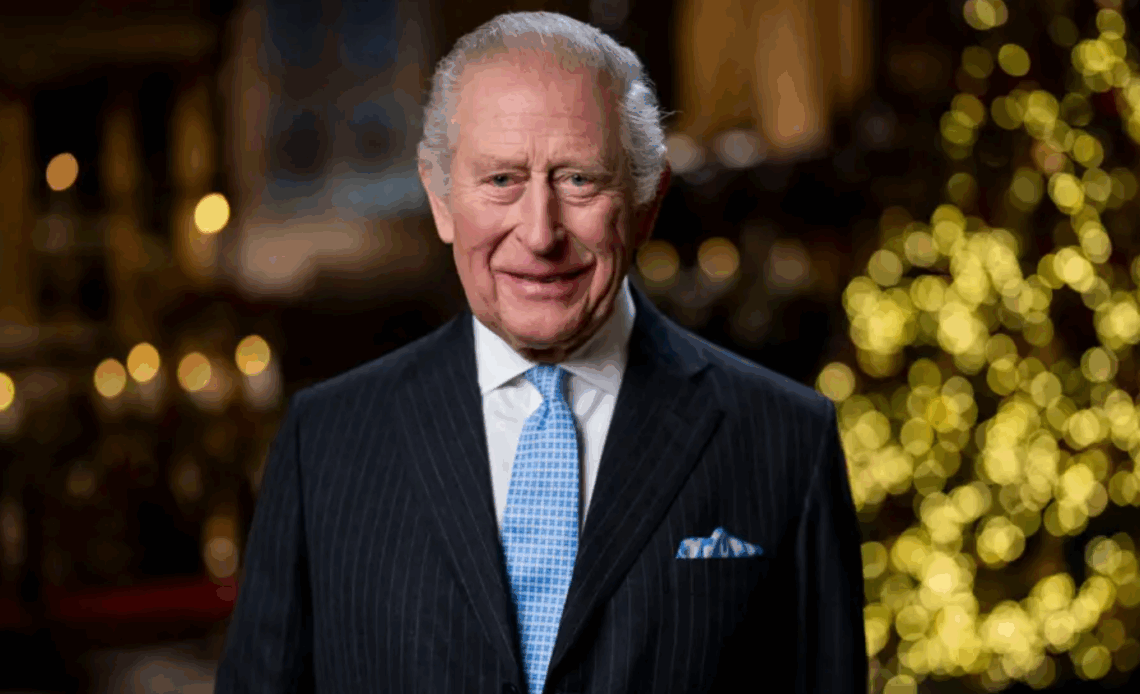
The monarch’s Christmas message is one of the most enduring traditions of the British monarchy. First delivered by King George V in 1932 over the radio, it was conceived as a means to connect directly with the nation in a modern, intimate way, bypassing ceremony and spectacle. Queen Elizabeth II carried the ritual forward with remarkable consistency, speaking almost invariably from the familiar surroundings of royal residences. King Charles III, however, is taking a different approach – one that subtly reshapes the ritual while preserving its essence.
Since ascending the throne, Charles has delivered his Christmas broadcasts from a strikingly varied set of locations. His first, at St George’s Chapel, Windsor, came in the immediate aftermath of the Queen’s death. The setting underscored continuity and personal mourning, rooting the message in tradition and solemnity. The following year, he chose Buckingham Palace, emphasizing the formal authority of the Crown shortly after his Coronation.
But in 2024, the King moved away from royal homes entirely, speaking instead from the Fitzrovia Chapel in central London. A former hospital chapel, it carries a history of service, compassion, and care – a tangible reflection of Charles’s long-standing focus on community and social responsibility. The choice of a space shared with the public, rather than reserved for royalty, marked a notable shift in tone and intention.
In 2025, he will again break with tradition, delivering his Christmas message from the Lady Chapel at Westminster Abbey. The chapel is one of the country’s most sacred spaces, housing the tombs of fifteen monarchs as well as the Royal Air Force Chapel commemorating the Battle of Britain. By broadcasting from a site steeped in faith, history, and national remembrance, Charles underscores reflection, pilgrimage, and continuity – themes that have shaped his reign in subtle but consistent ways.
In doing so, the King is balancing innovation with respect for precedent. He retains the central elements of the Christmas broadcast – intimacy, reflection, and a sense of connection to the public – but frames them differently, allowing the setting to amplify meaning. Where Elizabeth II’s consistency offered reassurance and stability, Charles’s variability conveys thoughtfulness, symbolic resonance, and engagement with history beyond the confines of palace walls.
The evolution is not a radical break but a quiet redefinition. George V sought to speak directly to citizens via the new medium of radio; Elizabeth II made that connection a fixture of modern monarchy; Charles is extending it, letting place, architecture, and historical memory speak alongside his words. In choosing chapels and abbeys over palaces, he invites the nation into shared spaces of faith, heritage, and reflection – subtly reshaping the Christmas broadcast while honouring its nearly century-old tradition.